Hot paper cups may look almost identical when stacked behind a coffee counter. But the differences become much more noticeable once they’re filled with freshly brewed coffee.
Imagine the morning rush at a busy café. A customer orders a large hot coffee, picks up the cup, and heads toward the door. Moments later, they notice moisture around the bottom seam. In another order, the lid doesn’t sit securely. The barista has to prepare the drink again.
One defective cup might seem like a minor inconvenience. For a restaurant chain serving hundreds or thousands of hot drinks, repeated packaging problems can mean wasted beverages, slower service, and unhappy customers.
The challenge is that many problems with hot paper cups aren’t immediately visible when buyers compare product photographs or supplier quotations.
So what should café owners and packaging purchasing managers examine before placing a bulk order?
Three common buying mistakes deserve particular attention.

1. Hot Paper Cups: Why Construction Matters More Than Appearance
The first mistake is assuming that all paper cups designed for hot drinks will perform the same way.
They won’t necessarily.
A paper cup is more than a printed paper cylinder. Its wall construction, internal barrier, bottom seam, and intended use all affect how it performs when holding a beverage.
What happens when a paper cup meets hot coffee?
Coffee shops need containers that maintain their shape during filling, handling, and drinking.
If a cup lacks sufficient structural stability for its intended use, it may feel less secure when a customer picks it up. If the bottom seal or side seam is defective, liquid may escape.
A leak near the bottom of the cup can be particularly frustrating because it may not become obvious until the drink has already left the counter.
That is why purchasing teams should review actual product samples rather than judging cup quality from pictures alone.
Before buying hot paper cups, consider these questions:
- Does the cup maintain its shape when filled with the intended beverage?
- Is there any visible leakage around the bottom or side seam?
- Can employees hold and handle the cup comfortably?
- Does the cup remain stable during normal service?
- Is the product intended for the temperature and type of drink being served?
These checks provide a more useful picture of product suitability than appearance alone.
Single-wall paper cups and heat protection
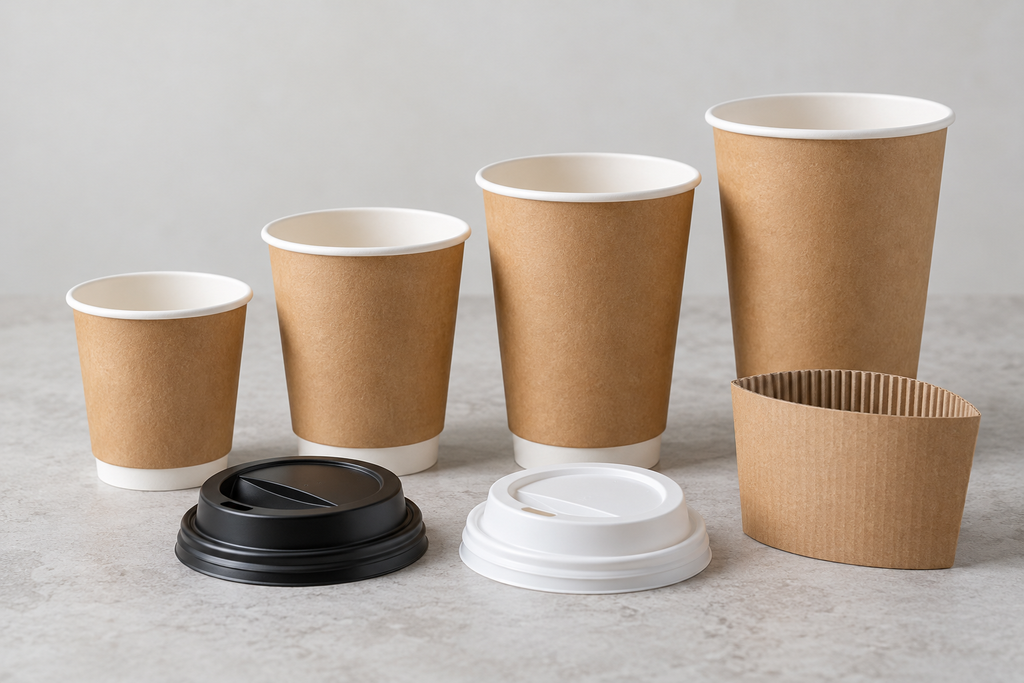
Golden Sleeve’s website includes single-layer paper cups among its product categories. It also offers paper cup sleeves as a separate packaging product.
For cafés evaluating single-wall cups, customer comfort matters. The outside of a cup containing a hot beverage may become uncomfortable to hold, depending on its construction and beverage temperature.
A compatible sleeve can provide an additional layer between the customer’s hand and the cup.
However, a sleeve should not be used to compensate for a defective cup or poor sealing.
The goal is to build a complete hot beverage packaging solution in which each component performs its intended function.
Key takeaway: Before comparing prices, confirm that the cup construction suits the drinks, serving temperatures, and handling conditions of your business.
2. Choosing Hot Paper Cups That Work With Your Lids and Service Routine
The second mistake is buying paper cups and lids as though they were completely independent products.
Picture a customer carrying two hot coffees to their car. The lids appear to fit, but one moves when the customer picks up the cup.
Even when the cup itself performs well, a poorly matched lid can undermine the entire takeaway experience.
Why lid compatibility matters
A cup and its lid must work together as a functional packaging system.
The cup’s rim dimensions, rim shape, and the lid’s closure design can all influence how securely the lid fits.
Buying a cup from one supplier and a lid from another may work perfectly well, but compatibility should never be assumed from a nominal diameter alone.
For cafés using paper cups for hot drinks, the following checks are particularly useful:
| What to check | Why it matters |
|---|---|
| Cup rim dimensions | Helps determine compatibility with the selected lid |
| Lid attachment | Reduces the risk of an insecure fit |
| Cup stability | Supports normal filling and handling |
| Sleeve compatibility | Helps improve comfort when holding hot drinks |
| Cup capacity | Ensures consistency with beverage menu sizes |
| Product samples | Allows practical testing before bulk purchase |
Golden Sleeve lists paper cups, paper lids, plastic lids, and sleeves within its product offering.
This allows buyers to discuss several packaging components with the same supplier, although the fit between specific products should still be confirmed.
Test the complete takeaway experience
A practical test doesn’t have to be complicated.
Ask staff to prepare drinks using the proposed cups, lids, and sleeves. Observe how the components behave during ordinary service.
Does the lid attach securely? Can a customer lift the filled cup without the lid shifting? Is the cup comfortable to hold? Does the complete package fit the café’s service routine?
Test with the beverage sizes your business actually sells.
A cup that works well for a small drink does not automatically mean every size in the product range will perform identically.
This becomes especially important for coffee chains operating across several locations.
Staff should not need to improvise a solution for poorly matched packaging during a busy morning shift.
Why consistency becomes more important at scale
An independent coffee shop may be able to identify a problem quickly and change its packaging.
For a growing café chain, changes can be more complicated.
Different stores may hold separate inventories. A new cup size may require compatible lids and sleeves. Purchasing teams may need to confirm that all locations receive the intended components.
Using clearly documented specifications makes these transitions easier to manage.
Key takeaway: Evaluate hot beverage cups as part of a complete takeaway packaging system, not as an isolated product.
3. Buying Hot Paper Cups in Bulk: Why the Lowest Quote Can Be Misleading
The third mistake is choosing a supplier primarily because its price per cup is lower.
Price matters. Disposable packaging is a recurring operating expense, and even small differences in unit cost can be significant for high-volume buyers.
But the purchase price doesn’t tell the whole story.
Imagine ordering a large shipment of hot paper cups only to discover that the lids used by your stores are incompatible.
The original quotation may have been attractive, but the business now faces additional work: checking alternative lids, changing specifications, or adjusting existing inventory.
Calculate the practical cost of a packaging decision
Before comparing bulk paper cup suppliers, purchasing managers should look beyond the quoted unit price.
Consider the following:
| Cost factor | Question for the buyer |
|---|---|
| Unit price | What is the price per usable cup? |
| Quality consistency | Are approved specifications maintained across orders? |
| Cup and lid compatibility | Will existing lids work with the new cups? |
| Packaging and shipping | What are the carton, freight, and delivery terms? |
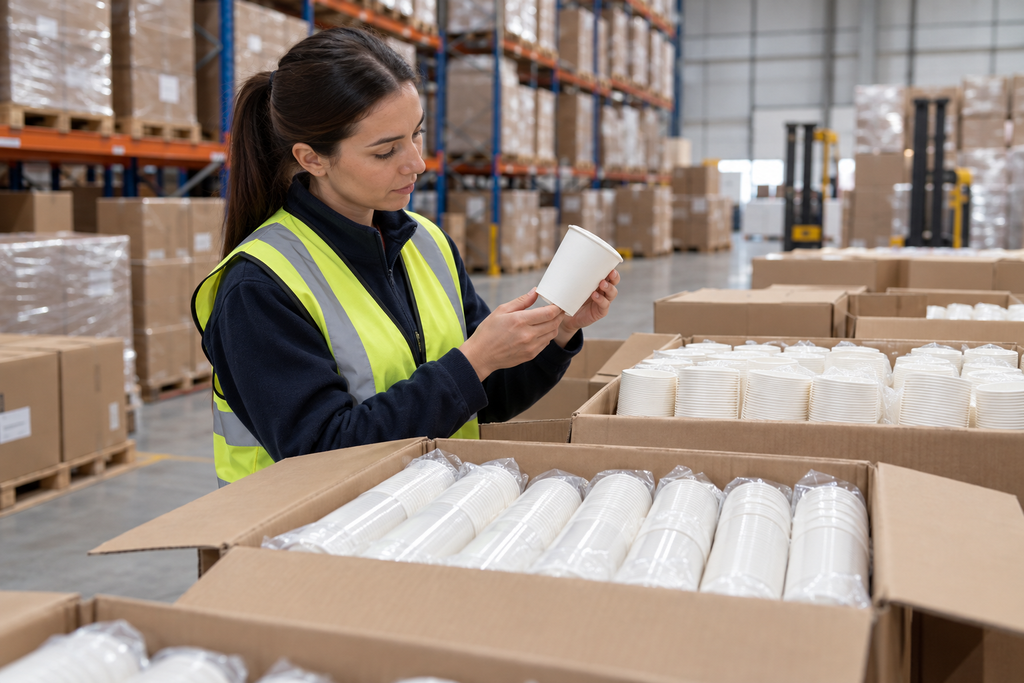
| Product inspection | How are specifications checked before acceptance? |
| Supply planning | Can the supplier support the required order schedule? |
A slightly lower cup price may not produce a lower overall purchasing cost if the order introduces additional handling, replacement, or compatibility expenses.
This is particularly relevant when bulk hot paper cups are purchased internationally.
Ask for clear specifications before committing
Golden Sleeve describes its business as an integrated operation connecting manufacturing, technology, logistics, and distribution, with roots in paper coffee sleeve manufacturing and US importing.
For a buyer looking to consolidate foodservice packaging purchases, having access to multiple packaging categories through one company can make specification discussions more straightforward.
However, a supplier’s product range should not replace a proper purchasing review.
Before approving an order, ask for confirmation of the exact paper cup specifications, compatible lids, intended beverage applications, packaging quantities, and shipping terms.
For US buyers, food-contact material suitability deserves additional attention.
The U.S. Food and Drug Administration provides regulatory information about food-contact substances and packaging materials. Purchasing teams should request appropriate documentation from suppliers and verify suitability for the intended food-contact conditions.
No specific certification should be assumed solely because a product is described as a paper cup for hot drinks.
Build a repeatable purchasing process
A reliable purchasing decision begins before the first large shipment.
Start by documenting the products your stores currently use. Include cup sizes, lid specifications, expected beverage applications, and ordering requirements.
Next, compare supplier samples against those specifications.
Record any approved changes so future purchases do not depend on informal conversations or outdated artwork and product references.
Finally, confirm the inspection, acceptance, and delivery terms before committing to the order.
For growing coffee chains and packaging distributors, this process can help make future purchases easier to manage.
Key takeaway: Compare total purchasing requirements and product compatibility—not just the lowest advertised price.
Conclusion: Buy Hot Paper Cups With Confidence
Choosing hot paper cups is not simply about finding an attractive disposable container.
The right purchasing decision should answer three important questions:
- Is the cup construction suitable for the intended hot drinks?
- Will the cup work reliably with the lids, sleeves, and service process already used by the business?
- Are the product specifications, inspection requirements, and purchasing terms clear before a bulk order is placed?
These questions can help cafés and restaurant chains make more informed packaging decisions while reducing avoidable misunderstandings with suppliers.
Golden Sleeve supplies paper-based foodservice packaging categories including cups, sleeves, and lids, supported by its integrated manufacturing and logistics business model.
For café owners, foodservice distributors, and restaurant purchasing managers, discussing a complete packaging requirement may be more useful than requesting a quotation for a cup alone.
Looking for hot paper cups for your coffee shop or distribution business?
Visit Golden Sleeve to explore its packaging categories and discuss the appropriate cup, lid, and sleeve specifications for your business.
Before requesting a quote, prepare your required cup sizes, expected quantities, lid requirements, and delivery destination.
A better hot drink experience starts with the packaging details customers rarely notice—until something goes wrong.