A custom cup sleeve can look great on a screen and still cause problems at the coffee counter. The color is right. The logo looks sharp. The price fits the budget. But when the cartons arrive, the sleeves may not sit properly on the cups, the printed design may look different from the approved artwork, or the purchasing team may discover an issue that should have been caught before production.
For a coffee shop or a growing café chain, these problems are more than minor packaging inconveniences. A sleeve is handled every time a customer picks up a hot drink. It needs to work as part of the cup, feel comfortable in the hand, and carry the brand without creating extra work for employees.
The real question is not simply where to buy custom cup sleeves. It is how to order them with fewer surprises.
Before approving your next bulk purchase, consider three decisions that deserve more attention than the unit price alone.

1. Custom Cup Sleeves: Why Cup Fit and Heat Protection Come First
Imagine a customer collecting a hot coffee during the morning rush. The employee slides a sleeve onto the cup, but it moves too easily. Perhaps the sleeve feels less secure than expected, or its position makes the drink uncomfortable to hold.
Even attractive packaging becomes a problem when it does not work comfortably in everyday service.
Check the cup before approving the sleeve
Not all hot beverage cups should be treated as interchangeable. Capacity matters, but so do the cup’s actual dimensions and the way the sleeve sits around its tapered surface.
Golden Sleeve offers thickened kraft paper cup sleeves designed for heat protection and a secure grip. Its listed product specifications include:
| Product detail | Golden Sleeve specification |
|---|---|
| Product | Kraft Paper Cup Sleeves |
| Cup compatibility | 12–20 oz |
| Listed caliber | 90 mm |
| Material | Thickened kraft paper |
| Standard case pack | 1,000 sleeves |
| Exterior printing | Custom printing available |
These specifications give purchasing teams a starting point, but the best way to confirm compatibility is to check the actual cups used in the business.
A coffee chain may use different cup sizes for different drinks. Rather than assuming that one sleeve will work with every cup, ask the supplier to review the intended combinations before production.
Consider the customer experience
Heat protection is a practical reason for using a paper cup sleeve. It helps customers hold hot beverages more comfortably without relying solely on the cup wall.
The sleeve must also remain comfortable to grip during ordinary use.
For café owners, this means evaluating more than the initial appearance. An appropriate sleeve should fit the service routine, the cup dimensions, and the customer’s handling experience.
The buying lesson: Approve the sleeve based on the actual cup and how customers will use it—not just a photograph or a capacity label.
2. Custom Cup Sleeves Printing: Why Artwork Approval Is Not Enough
A branded cup sleeve is a small packaging component, but it is also something customers see and touch while drinking.
For independent cafés, the artwork may contain a carefully developed logo. For larger chains, consistency across multiple stores becomes particularly important.
The challenge is that a design that looks correct in a digital file may not communicate the same way on the finished sleeve.
Review the print details before production
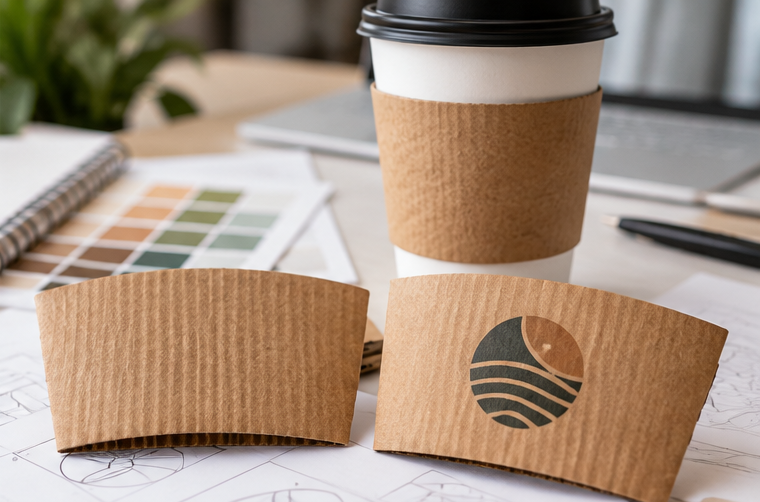
Golden Sleeve offers custom exterior printing for its kraft paper cup sleeves. Its published artwork guidance recommends confirming product size, available print area, color count, and case pack before sampling.
It also recommends supplying vector artwork when possible and identifying brand colors using Pantone references.
Why does this matter?
A logo that works on a flat screen must eventually appear on a sleeve wrapped around a cup. Text placement, print boundaries, and legibility all need to be considered on the physical product.
The buying team should ask questions before signing off:
- Will the logo remain clearly visible when the sleeve is fitted to the cup?
- Has the supplier received the correct artwork revision?
- Are important brand colors identified?
- Has the print position been approved on a physical sample?
- Is the approved sample documented for future reference?
These questions are especially important for businesses ordering branded packaging in larger quantities.
Separate artwork approval from product approval
Golden Sleeve’s published custom-printing guidance makes an important distinction: approving the artwork and approving the product are two different checks.
The physical sample should be reviewed for fit, print position, legibility, and color under normal lighting. The approved sample and revision date should then become part of the purchasing specification.
This creates a clearer reference for both the buyer and the production team.
Custom printed cup sleeves should not be treated as finished simply because the design file has been approved.
The buying lesson: Approve the printed physical sample, not just the artwork. A clear production reference helps prevent misunderstandings later.
3. Buying Custom Cup Sleeves in Bulk: The Risk That Appears After Payment
Fit and printing are important, but there is another concern that purchasing managers often face: what happens if the bulk order does not match the approved specifications?
With overseas manufacturing, the buyer may be asked to pay before the goods can be inspected locally.
That creates a difficult situation. By the time an issue is discovered, the order may already be paid for and international transportation may be involved.
The cost is not limited to the sleeve price
Golden Sleeve lists a standard reference price of $19.70 per case of 1,000 kraft paper cup sleeves. However, final pricing depends on factors including order volume, artwork, material, and delivery terms.
For businesses importing foodservice packaging into the United States, understanding import procedures is another important part of purchasing. Buyers can review official guidance from U.S. Customs and Border Protection to better understand importer responsibilities before placing an international order.
This is why comparing suppliers only by an advertised case price may not provide the full picture.
A purchasing manager should also consider whether the supplier can clearly document the product specifications, coordinate delivery, and provide a workable inspection process.
The lowest initial quote may not be the easiest purchase to manage if important details remain unresolved.
Understand the inspection and payment process
Golden Sleeve describes a procurement model for qualified orders involving a 50% production deposit, followed by the remaining 50% after the goods arrive at a local bonded warehouse and pass inspection.
The process outlined on its website includes four stages:
- Approve the specifications. Confirm the size, material, artwork, case pack, and sample.
- Pay the production deposit. Manufacturing begins against the approved reference.
- Inspect locally. Goods arrive through the coordinated DDP delivery process at a local bonded warehouse.
- Pay the remaining balance. Final payment follows successful inspection.
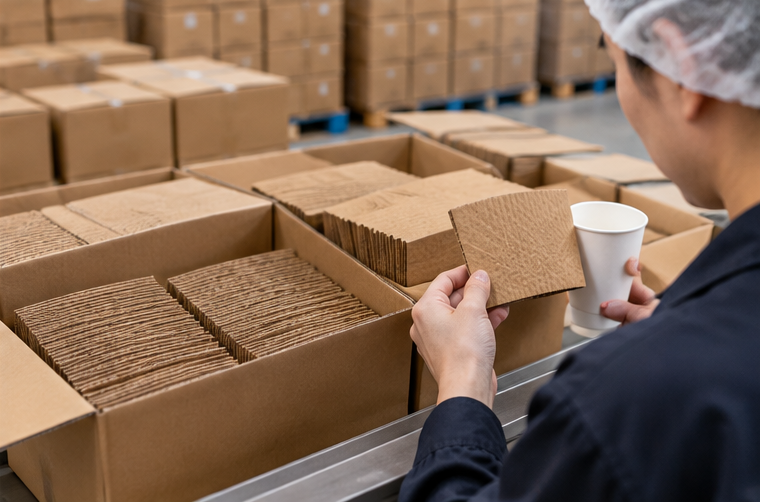
The company states that buyers can review product construction, quantity, printing, and packaging condition through this local inspection process.
For an American café chain or packaging distributor, the appeal is straightforward: greater visibility into the goods before the final payment.
Eligibility and commercial terms should always be confirmed directly with the company before placing an order.
Golden Sleeve also provides US-based support for specification discussions, sampling, logistics, and after-sales matters.
The buying lesson: The purchasing process deserves as much scrutiny as the product. Before ordering in bulk, establish exactly what will be inspected, where it will happen, and when payment becomes due.
Conclusion: Better Custom Cup Sleeves Start With Better Questions
Ordering custom cup sleeves should not be a guessing exercise.
The most useful purchasing questions are also the simplest. Will the sleeve fit the cups customers actually use? Has the printed physical sample been approved? And can the buyer verify the bulk goods against that approval before completing payment?
These three checks address a common problem in foodservice packaging: small specification mistakes can become much harder to resolve once an order reaches production.
Golden Sleeve combines kraft paper cup sleeve manufacturing, exterior printing options, coordinated logistics, and US-based customer support. For eligible orders, its published inspection-based payment structure adds another point worth discussing with the purchasing team.
Before requesting a quote, prepare your cup size, expected order quantity, artwork requirements, and delivery ZIP code. Clear information at the beginning makes the specification discussion more productive.
Looking for custom cup sleeves for your café, restaurant chain, or distribution business?
Explore Golden Sleeve’s Kraft Paper Cup Sleeves or contact the Golden Sleeve team to discuss product compatibility, custom printing, and bulk ordering requirements.
For additional preparation, read the company’s custom printing and artwork guide.
A sleeve may be a small part of your packaging order. Choosing it carefully can make the entire purchasing process more predictable.