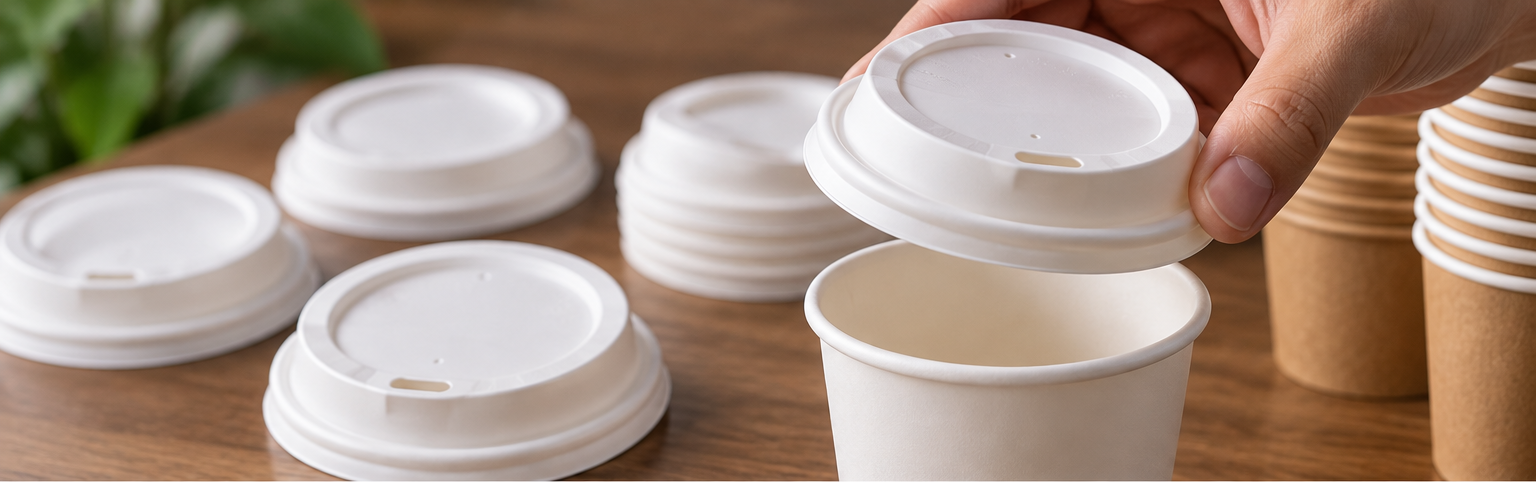
Paper cup lids can look perfectly secure—until a customer picks up a hot coffee and discovers that the lid does not stay in place.
Imagine a busy coffee shop during the morning rush. A barista prepares a takeaway latte, presses a lid onto the cup, and hands it to a customer. Everything appears normal.
But as the customer walks toward the door, the lid shifts. Coffee spills onto the cup, the counter, or even the customer’s clothing.
What looked like a minor packaging detail has suddenly become a customer service problem.
For independent cafés, restaurant chains, and foodservice distributors, choosing the wrong paper cup lids can create unnecessary waste, delays, and complaints.
The surprising part? These problems are not always caused by obviously defective products. Sometimes the issue is simply that the lid and cup were never properly tested together.
Before placing your next bulk order, here are three common purchasing mistakes worth avoiding.
1. Paper Cup Lids: Why a Similar Diameter Doesn’t Guarantee a Secure Fit
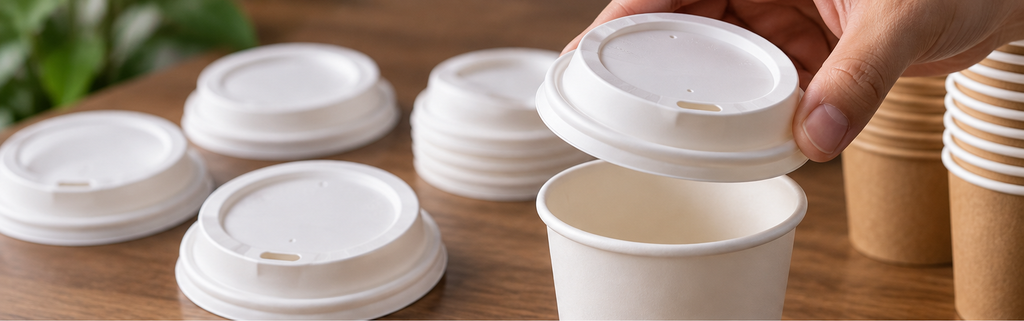
One of the most common mistakes in disposable drink packaging is assuming that two products with similar size descriptions will automatically fit together.
A supplier may offer a paper lid designed for a particular cup diameter. A buyer may already have cups with a seemingly matching measurement.
That sounds straightforward.
However, the actual connection between a lid and a paper cup depends on more than one nominal dimension.
The hidden problem: cup rim compatibility
The top rim of a paper cup has a specific shape and structure. The lid must engage with that rim in a way that remains secure during normal use.
Differences in rim profiles, manufacturing tolerances, and lid designs can affect the fit.
As a result, paper lids for coffee cups should be evaluated with the actual cups they will be used on.
A purchasing manager should consider several practical questions:
- Does the lid attach consistently without excessive force?
- Does it remain secure when the filled cup is lifted?
- Is the lid easy for employees to apply during busy service?
- Does the connection remain stable during ordinary handling?
- Are the cup and lid dimensions confirmed by the supplier?
These checks matter because a lid that appears to fit an empty cup may behave differently during actual beverage service.
Test the combination, not just the individual product
Golden Sleeve lists both paper lids and paper cups among its foodservice packaging categories.
This provides an opportunity for buyers to discuss cup and lid requirements together, rather than evaluating each component separately.
Nevertheless, specific product compatibility should always be confirmed before purchasing.
If a café uses several beverage sizes, each intended cup-and-lid combination should be checked.
For restaurant chains operating across multiple locations, documenting approved combinations is particularly useful.
It helps purchasing teams avoid changing a lid specification without considering the cups already held in inventory.
The key lesson: A lid is only as useful as its compatibility with the cup. Always evaluate the two products as a complete packaging system.
2. Choosing Paper Cup Lids for Real Takeaway Coffee Conditions

The second mistake is assuming that a lid which fits well on a stationary cup will perform equally well throughout a customer’s journey.
Think about how takeaway coffee is actually consumed.
A customer may carry the drink through a crowded store, place it in a vehicle cup holder, or walk several blocks before opening it.
During this time, the cup and lid experience movement, handling, and changes in position.
Why normal customer movement matters
Even a properly attached lid should not be assumed to make an open-drink container completely spill-proof.
However, an unsuitable lid-and-cup combination can increase the chance of problems during everyday use.
When evaluating takeaway coffee cup lids, buyers should consider how easily employees can apply them and how securely they remain attached under intended conditions.
A practical in-store evaluation can help identify potential problems before a large shipment is ordered.
Consider checking the following situations:
| Application scenario | What to evaluate |
|---|---|
| Busy coffee counter | Ease and consistency of lid attachment |
| Customer walking with coffee | Stability during normal carrying |
| Takeaway drinks in vehicles | Suitability for the cup and intended handling |
| Hot beverage service | Material suitability for the beverage temperature |
| Multi-location café chain | Consistency of approved cup-and-lid combinations |
These checks should be performed safely using appropriate test conditions.
Material suitability is more than an environmental question
Paper-based packaging is often considered by businesses reviewing their use of disposable materials.
But material choice should involve more than appearance or sustainability messaging.
For disposable paper cup lids, buyers should also consider the intended beverage, temperature, food-contact requirements, and any material treatments used in the product.
The U.S. Food and Drug Administration provides guidance on packaging and food-contact substances.
This guidance explains the regulatory framework applicable to food-contact substances. It does not mean every paper lid is automatically approved for every food-contact application.
Buyers should request suitable product documentation and confirm that a specific lid is appropriate for its intended use.
A lid should support the service experience
Coffee shops rely on repeatable operations.
During a morning rush, staff need packaging components that can be handled efficiently.
If employees must repeatedly press, rotate, or replace lids to obtain an acceptable fit, the packaging may create unnecessary friction in daily service.
Similarly, a customer should not have to question whether the lid will remain attached during ordinary handling.
These concerns are particularly relevant to hot beverages, where spills can create safety risks.
The key lesson: Test paper cup lids in the conditions your customers and employees actually experience, not just on an empty cup at a purchasing desk.
3. Buying Paper Cup Lids in Bulk: Why Price Alone Can Be Misleading
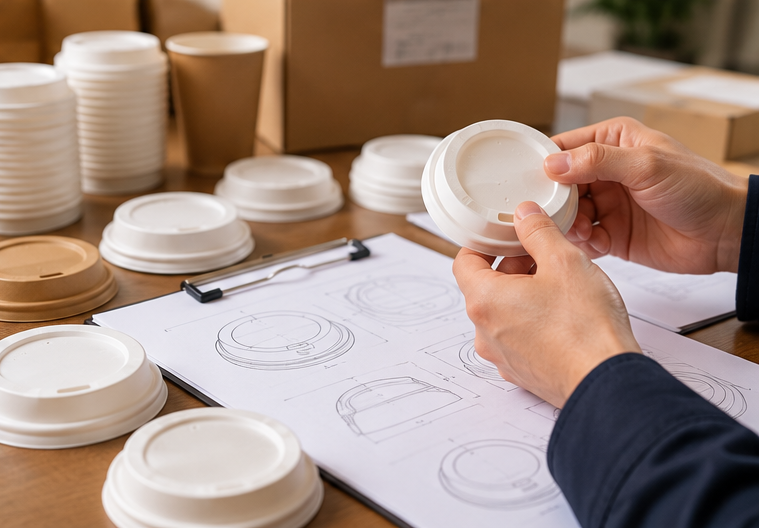
The third mistake is choosing a paper lid supplier based primarily on the lowest quoted unit price.
For coffee chains and foodservice distributors, packaging costs directly affect purchasing budgets.
Small differences in unit pricing can become meaningful when orders involve large quantities.
But a lower price is not necessarily a better purchasing decision if the specifications are unclear.
What happens when a bulk order is wrong?
Imagine a regional coffee chain switching to a new lid supplier to reduce packaging expenses.
The initial samples appear acceptable, and the quotation is competitive.
After the shipment arrives, employees at different locations report inconsistent lid attachment.
Now the purchasing department must investigate whether the problem involves cup dimensions, lid specifications, production variation, or a mismatch between the products.
The issue may require additional testing and changes to inventory planning.
The original savings can become less attractive once the business considers the extra work involved.
This hypothetical example demonstrates why paper cup lids wholesale purchasing requires a structured evaluation.
Compare the complete purchasing requirements
Before ordering bulk paper cup lids, purchasing teams should document the specifications and commercial requirements that matter most.
| Purchasing factor | Question to ask |
|---|---|
| Cup compatibility | Which exact cup specifications are supported? |
| Material | Is the lid appropriate for the intended beverages? |
| Sample approval | Can the intended lid-and-cup combination be evaluated? |
| Packaging quantity | How many lids are included in each carton? |
| Supply consistency | How are approved specifications maintained? |
| Logistics | What delivery terms and schedules apply? |
| Quality documentation | What product information and inspection records are available? |
A supplier should be able to discuss these requirements before the buyer commits to a large order.
Why integrated packaging sourcing can help
Golden Sleeve presents its business as a combination of manufacturing, logistics, technology, and distribution.
Its published product categories include paper lids, plastic lids, single-layer paper cups, cup sleeves, and other disposable foodservice packaging.
For purchasing managers sourcing several packaging components, this range can make it easier to discuss related product requirements through one supplier.
However, having access to several product categories does not automatically guarantee compatibility between every product.
A buyer should still confirm exact specifications, sample requirements, delivery conditions, and the purchasing agreement.
The best approach is to treat the first order as an opportunity to establish a repeatable purchasing process.
Create a clear approval process
Before committing to a large purchase of paper cup lids, consider these steps:
- Identify the exact cups used by your business, including their relevant rim specifications.
- Request details of the intended paper lid products.
- Evaluate samples using the actual cups and beverages.
- Record the approved product specifications and packaging requirements.
- Confirm order quantities, delivery terms, and acceptance procedures.
Once a combination has been approved, the reference specifications should be retained for future purchases.
This can reduce misunderstandings when ordering again or supplying multiple locations.
The key lesson: Compare the total purchasing process, not just the price per lid.
Conclusion: Choose Paper Cup Lids With Fewer Surprises
Buying paper cup lids should not involve guessing whether the product will perform as expected.
For cafés, restaurant chains, and foodservice distributors, three purchasing decisions deserve particular attention.
First, confirm that the lid fits the actual paper cup. Second, evaluate the combination under realistic takeaway conditions. Third, establish clear specifications before placing a bulk order.
These checks can help buyers reduce avoidable mismatches and make more informed purchasing decisions.
Golden Sleeve offers paper lids alongside paper cups, cup sleeves, and other foodservice packaging products through its integrated manufacturing and supply chain business.
For buyers evaluating packaging options, discussing the complete cup-and-lid combination can be more productive than comparing individual components in isolation.
Looking for paper cup lids for your coffee shop, restaurant chain, or wholesale packaging business?
Explore the packaging categories at Golden Sleeve and contact the company to discuss your required cup dimensions, lid specifications, estimated order quantities, and delivery needs.
For related packaging considerations, explore the company’s cup and sleeve product categories, or read our article on choosing hot paper cups if it is available on your website.
The smallest packaging component can make a noticeable difference to the customer experience—especially when it doesn’t fit.