
When serving cold beverages for takeaway or delivery, the right lid is just as important as the cup itself. Plastic cup lids are widely used by coffee shops, cafés, restaurants, bubble tea stores, juice bars, and other foodservice businesses because they can help prevent spills and make beverages easier to transport.
However, choosing the right cup lid involves more than simply finding a lid that fits. Businesses need to consider cup size, beverage type, lid design, sealing performance, packaging requirements, branding, and sustainability goals.
For companies purchasing beverage packaging in bulk, understanding these factors can make the sourcing process easier and help avoid costly compatibility problems.
Table of Contents
What Are Plastic Cup Lids?
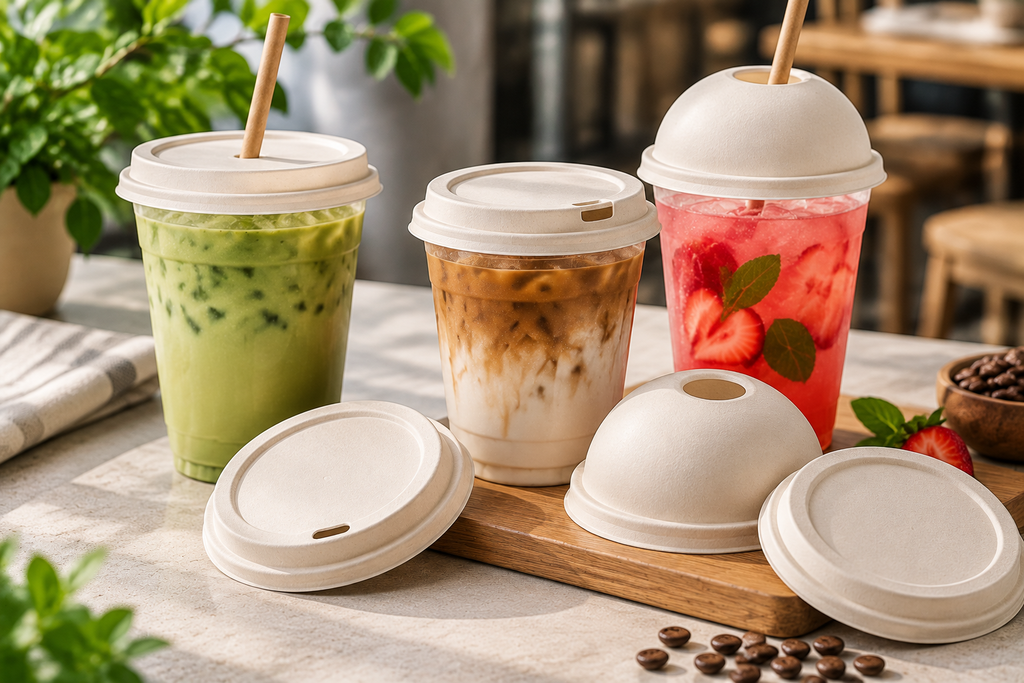
Plastic cup lids are protective covers designed to fit disposable beverage cups. They typically include an opening for drinking or inserting a straw and are manufactured to match specific cup diameters and designs.
They are commonly used for cold drinks such as:
- Iced coffee
- Iced tea
- Soft drinks
- Fruit beverages
- Smoothies
- Milkshakes
- Juice
- Bubble tea
- Specialty cold beverages
A properly designed lid should fit securely onto the cup and help reduce leaks and spills during transportation.
For foodservice operators, the lid is therefore part of the overall beverage packaging system rather than an independent accessory.
Why Do Businesses Use Plastic Cup Lids?
The primary purpose of a beverage lid is to provide a secure closure for takeaway drinks. When customers purchase beverages to take to work, drive home, or carry while walking, an appropriate lid can make the experience significantly more convenient.
1. Spill Protection
A secure lid helps keep the beverage inside the cup during normal transportation. This is particularly important for delivery services and takeaway orders.
2. Convenient Drinking
Different lid designs can provide different drinking experiences. Some have a direct drinking opening, while others are designed to accommodate straws.
3. Compatibility With Cold Cups
Plastic lids are commonly paired with disposable cold beverage cups. The correct combination of cup diameter and lid design is essential for a secure fit.
4. Suitable for High-Volume Foodservice
Cafés and restaurants may use thousands of lids every month. Bulk purchasing can help businesses maintain consistent packaging inventory and simplify procurement.
Common Types of Plastic Cup Lids
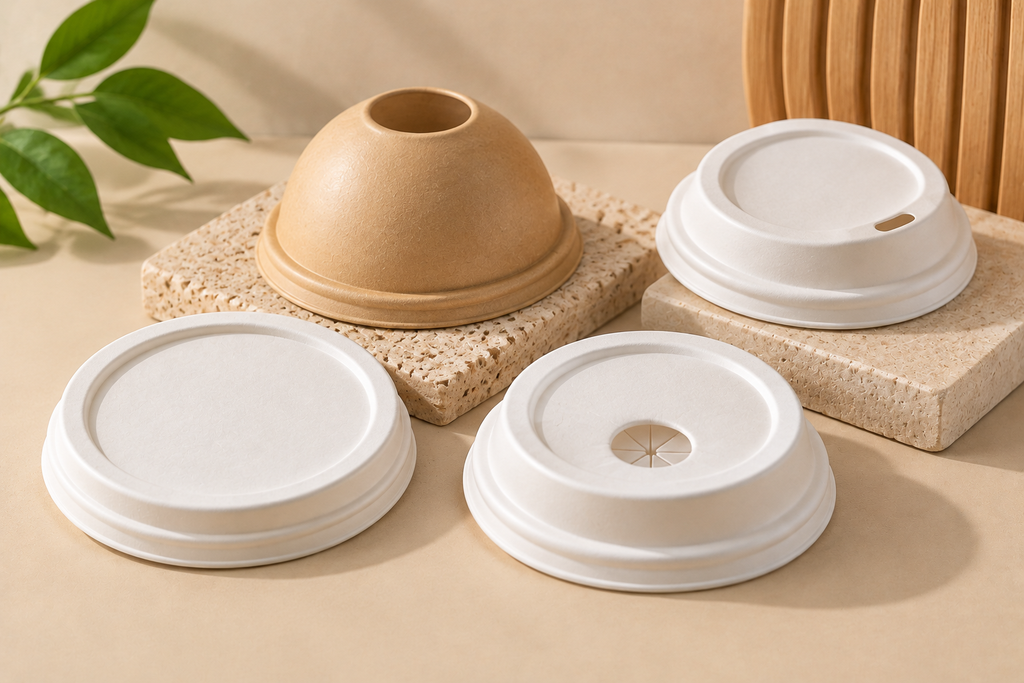
Not every beverage requires the same type of lid. The best option depends on the product being served and the way customers consume it.
Flat Lids
Flat lids have a relatively low profile and are commonly used for iced coffee, soft drinks, iced tea, and other cold beverages.
They are a practical choice when businesses want simple and space-efficient beverage packaging.
Dome Lids
Dome lids provide additional space above the beverage surface. They can be useful for drinks with whipped cream, toppings, foam, or other ingredients that require extra headroom.
Smoothies and specialty beverages are common applications.
Straw-Opening Lids
Some plastic cup lids include an opening designed specifically for a straw. These lids are frequently used by beverage businesses serving drinks such as iced tea, fruit drinks, smoothies, and bubble tea.
Direct-Drink Lids
Direct-drink designs allow customers to drink through an integrated opening without using a straw. This type of design can provide a convenient takeaway experience and may reduce the need for additional accessories.
How to Choose the Right Plastic Cup Lids
Selecting a lid should start with the specifications of the cup and beverage.
1. Check Cup Size and Diameter
Cup volume alone is not enough to determine compatibility. A 16 oz cup, for example, may have a different rim specification from another 16 oz cup.
Before placing a bulk order, confirm:
- Cup capacity
- Cup rim diameter
- Lid dimensions
- Rim structure
- Cup manufacturer
- Intended lid style
Testing the lid with the actual cup is strongly recommended before committing to a large production run.
2. Consider the Beverage
Think about what your customers are drinking.
For standard iced beverages, a flat or straw-opening lid may be appropriate. Drinks containing whipped cream or toppings may require a dome-style design.
The lid should provide enough clearance while maintaining a secure fit.
3. Evaluate Leak and Spill Resistance
A takeaway beverage may be transported in a car, carried by hand, or delivered by courier. A poorly fitting lid can create a frustrating customer experience.
Businesses should therefore evaluate how securely the lid attaches to the cup and whether the design provides adequate protection against accidental spills.
4. Consider Storage and Case Packing
For commercial buyers, storage efficiency matters. Thousands of lids can take up significant warehouse space, so case pack and stacking characteristics should be considered during procurement.
Packaging specifications should be confirmed before ordering to ensure the product fits your storage and distribution system.
5. Consider Your Sustainability Strategy
Environmental considerations are increasingly important when businesses select disposable foodservice packaging.
Although plastic cup lids remain a common solution, some businesses are exploring paper-based alternatives to reduce their reliance on plastic.
The appropriate choice depends on the company’s sustainability objectives, beverage requirements, local regulations, and customer expectations.
Plastic Cup Lids vs. Paper Cup Lids
Plastic and paper lids can serve similar functions, but they have different material characteristics and purchasing considerations.
Plastic lids are traditionally popular because they can provide a lightweight and familiar solution for cold beverages.
Paper lids, on the other hand, can help businesses move toward a plastic-free packaging strategy.
For example, Golden Sleeve offers plastic-free paper lids made with 100% paper construction. The current product specification is designed for 12–20 oz coffee cups, with a standard case pack of 1,000 lids. Custom exterior printing is also available, depending on project requirements.
This gives foodservice businesses another option when sustainability is an important part of their packaging strategy.
When Should You Buy Plastic Cup Lids Wholesale?
Businesses with consistent beverage sales may benefit from purchasing lids in bulk rather than buying small quantities repeatedly.
Wholesale purchasing can be particularly relevant for:
- Coffee shop chains
- Independent cafés
- Restaurants
- Bubble tea businesses
- Catering companies
- Beverage brands
- Foodservice distributors
- Convenience stores
- Takeaway businesses
When purchasing in larger quantities, buyers should look beyond the unit price.
The total purchasing decision may also involve product quality, case quantity, printing, shipping, warehousing, delivery terms, and supplier support.
What Should You Ask a Cup Lid Supplier?
Before placing a bulk order, it is useful to provide the supplier with detailed requirements.
Consider asking about:
Product Specifications
Confirm the lid material, dimensions, cup compatibility, design, and intended beverage application.
Minimum Order Quantity
Ask about minimum order quantities and whether different sizes or designs require separate production runs.
Custom Printing
If branding is important, determine whether the supplier offers custom printing and what artwork specifications are required.
Samples
A physical sample can help verify fit, appearance, and functionality before mass production.
Packaging
Confirm the number of lids per case and how the products are packaged for transportation.
Delivery
For international purchasing, understand the shipping method, delivery terms, estimated lead time, and destination requirements.
These questions can help buyers compare suppliers more effectively.
Custom Beverage Packaging for Growing Foodservice Brands
For businesses purchasing multiple packaging products, sourcing each item from a different supplier can create unnecessary complexity.
A more integrated approach may combine beverage cups, lids, sleeves, food containers, food wrap, and paper bags through one packaging partner.
Golden Sleeve provides custom foodservice packaging supported by overseas manufacturing, dedicated logistics, U.S. warehousing, and U.S.-based customer support. The company works with customers on specifications, sampling, logistics, and after-sales resolution.
This type of supply model can be useful for businesses that need consistent packaging across multiple product categories.
Why Specification Matters More Than Price
When comparing plastic cup lids suppliers, the lowest quoted price does not necessarily represent the lowest overall cost.
A lid that does not fit correctly can lead to:
- Product waste
- Customer complaints
- Repackaging
- Delivery problems
- Inventory issues
- Additional shipping costs
For this reason, commercial buyers should evaluate the complete purchasing process rather than comparing unit prices alone.
A supplier that can help with product specifications, samples, production, logistics, and local support may provide greater value over the entire order lifecycle.
A Practical Checklist for Ordering Cup Lids
Before requesting a quotation, prepare the following information:
Product
- Lid type
- Cup type
- Beverage type
Size
- Cup capacity
- Rim diameter
- Lid dimensions
Quantity
- Estimated order volume
- Required case pack
Branding
- Logo
- Artwork
- Printing requirements
Delivery
- Delivery ZIP code
- Required delivery date
- Preferred shipping terms
Having these details ready can make the quotation process faster and reduce the possibility of specification errors.
Frequently Asked Questions About Plastic Cup Lids
Are plastic cup lids suitable for all disposable cups?
No. Cup lids are not universally interchangeable. The lid needs to match the cup’s rim diameter and design. Always confirm compatibility before placing a bulk order.
What drinks commonly use plastic cup lids?
Plastic lids are commonly used for iced coffee, iced tea, smoothies, juice, soft drinks, bubble tea, and other cold takeaway beverages.
Should I buy cup lids in bulk?
If your business regularly sells takeaway beverages, bulk purchasing may help simplify inventory management and reduce the frequency of individual purchases. The ideal quantity depends on your sales volume and available storage space.
Can cup lids be customized?
Customization depends on the supplier and product design. Some packaging suppliers offer custom printing or other modifications for commercial orders.
Are there alternatives to plastic cup lids?
Yes. Paper-based lids are one alternative. Golden Sleeve currently offers plastic-free paper lids made from 100% paper, designed for 12–20 oz coffee cups.
Final Thoughts
Choosing the right plastic cup lids requires more consideration than simply finding a low-cost lid. Businesses should evaluate cup compatibility, beverage type, spill protection, packaging, order quantity, customization, delivery, and sustainability requirements.
For companies purchasing beverage packaging in volume, working with a supplier capable of supporting specifications, sampling, manufacturing, logistics, and customer service can make the procurement process more efficient.
If your business is comparing plastic cup lids wholesale options or considering a transition to paper-based lids, preparing your cup dimensions, estimated quantity, artwork requirements, and delivery location is a good place to start.
Golden Sleeve provides custom foodservice packaging solutions and accepts product inquiries based on product specifications, quantity, printing requirements, and delivery ZIP code.