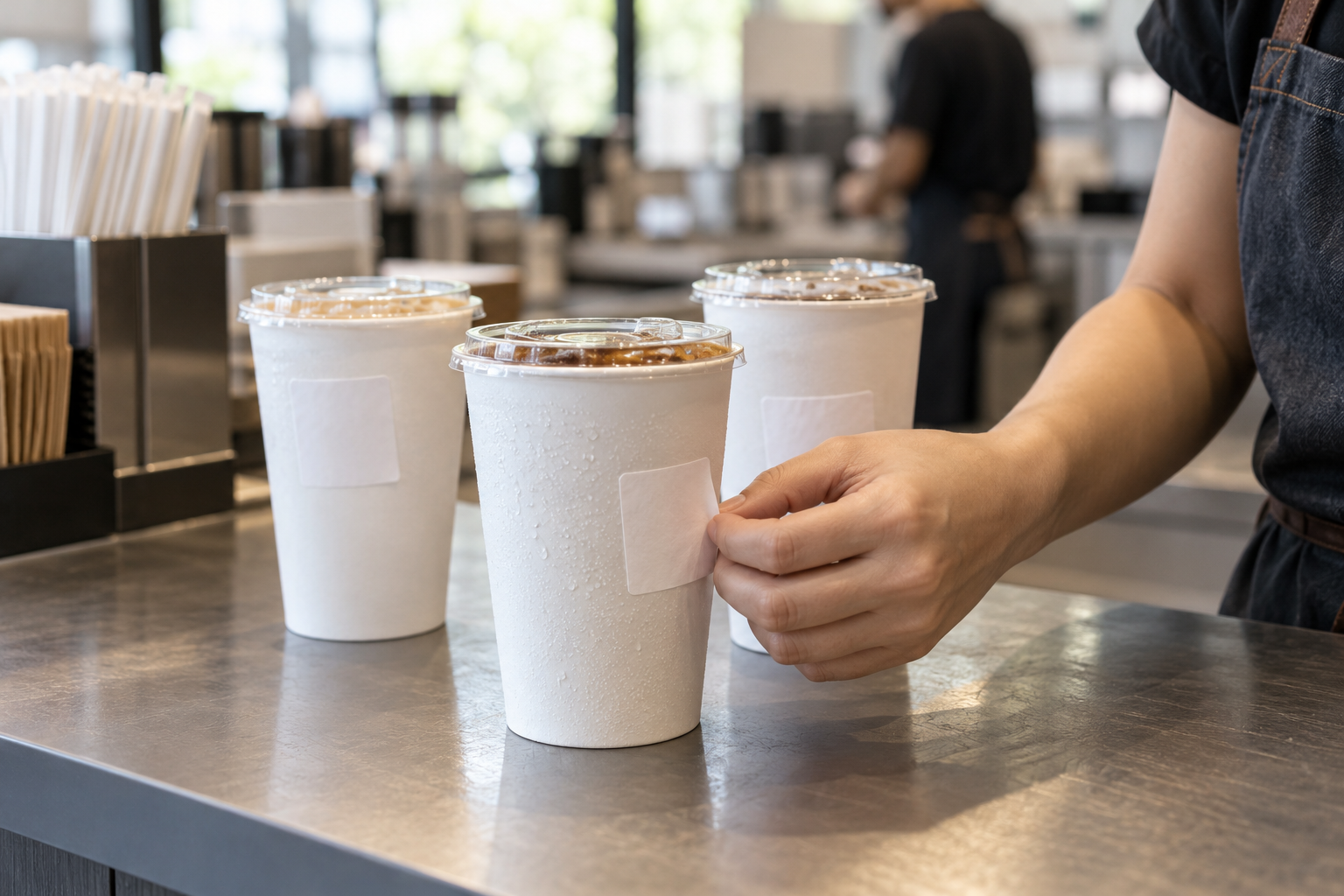
A cup can hold an iced drink while its order sticker becomes difficult to read or starts lifting at the edge. For cafés using cold drink cups, the cup, label and printing method need to work together through preparation and pickup. The useful question is whether staff and customers can still identify the drink under the conditions in which it is actually served.
1. Separate the cup requirement from the label requirement
Golden Sleeve lists single-wall cold paper cups with coating inside and outside, described as intended to resist condensation-related softening. That product description concerns the cup’s construction; it does not establish that a particular adhesive label will stay attached or that printed order details will resist moisture.
Before changing cold drink cups, identify the actual problem. Is the text smearing, the label surface wrinkling, the adhesive lifting, or the sticker hidden by another packaging item? Record the cup product code, label material and printing method. Each observation points to a different part of the combination to review.
2. Test cold drink cups with the label you actually use
Use the same label stock, printer settings or marker used during service. Ask the label supplier about application conditions, moisture exposure and the intended cup surface. A sample test should follow that supplier’s instructions rather than relying on a generic claim about waterproof packaging.
Avery’s explanation of waterproof and water-resistant labels distinguishes occasional moisture from more prolonged exposure. Treat those terms as a reason to check the specific label specification, not as proof that every label in a category is suitable for your cold drink cups. Confirm printing requirements as well as the adhesive and face material.
3. Check placement on the completed drink
Choose a position where the sticker can be read without moving the lid or covering important information. Check that it is not hidden by a sleeve or a staff member’s normal grip. Keep it clear of the drinking opening and follow the relevant product-use guidance.
Try the proposed position on each intended cup size. A flat label may sit differently as the cup shape changes. If the café serves several drinks in cups that look similar, review how the order reference can be seen at the pickup counter instead of assuming customers will identify the contents by appearance.
4. Review the real preparation-to-pickup period
Prepare the intended drink with the usual ice and observe the label through a representative waiting period. Include ordinary handling and the conditions your shop actually experiences. There is no universal test duration that represents every café, so base the review on your own service observations.
Record the result for each combination of cold drink cups, label and printing method. Check whether the text remains readable and whether the label remains in its intended position. If a problem appears, change one relevant element at a time and repeat the check. This makes the result more useful than replacing the whole packaging setup without identifying what failed.
5. Keep order identification consistent for staff
Once a combination meets your requirements, record the approved cup code, label stock, printing method and position. Make the reference available where labels are applied. Recheck it if you change the cup, label supplier or printing setup.
For custom cold drink cups, review the space used by branding and order identification together. Golden Sleeve can discuss available product and printing requirements, but its cup listing does not promise label performance. Ask the team for the actual cup specification and sample arrangements, and evaluate third-party labels separately.
Questions about cold drink cups and order stickers
Does an exterior coating stop condensation? Do not assume so. The website describes resistance to moisture-related softening, not elimination of condensation. For the broader handling issue, see our cold-drink condensation article.
Should I replace the cup if a label lifts? First review the cup surface, label instructions, application and serving conditions. Will a water-resistant label prevent all text smearing? Confirm the label and printing combination; the label material alone does not establish the result.
Discuss cold drink cups for your café
If you are reviewing cold drink cups for iced coffee, tea or another cold beverage, share the cup sizes, estimated quantities, printing needs and delivery ZIP code with Golden Sleeve. Mention that you also need to evaluate an order-label combination.
Contact Golden Sleeve to request the relevant cup specifications and discuss samples. Use those samples with your label supplier’s guidance before standardizing the setup for regular service.