Custom paper foodservice packaging takes more planning than choosing a cup size or sending a logo. A useful purchasing plan connects the packaging your staff needs, the quantities your sites use and the way cartons will reach each location. Golden Sleeve supports US buyers through a domestic team, overseas manufacturing, dedicated logistics and US warehousing.
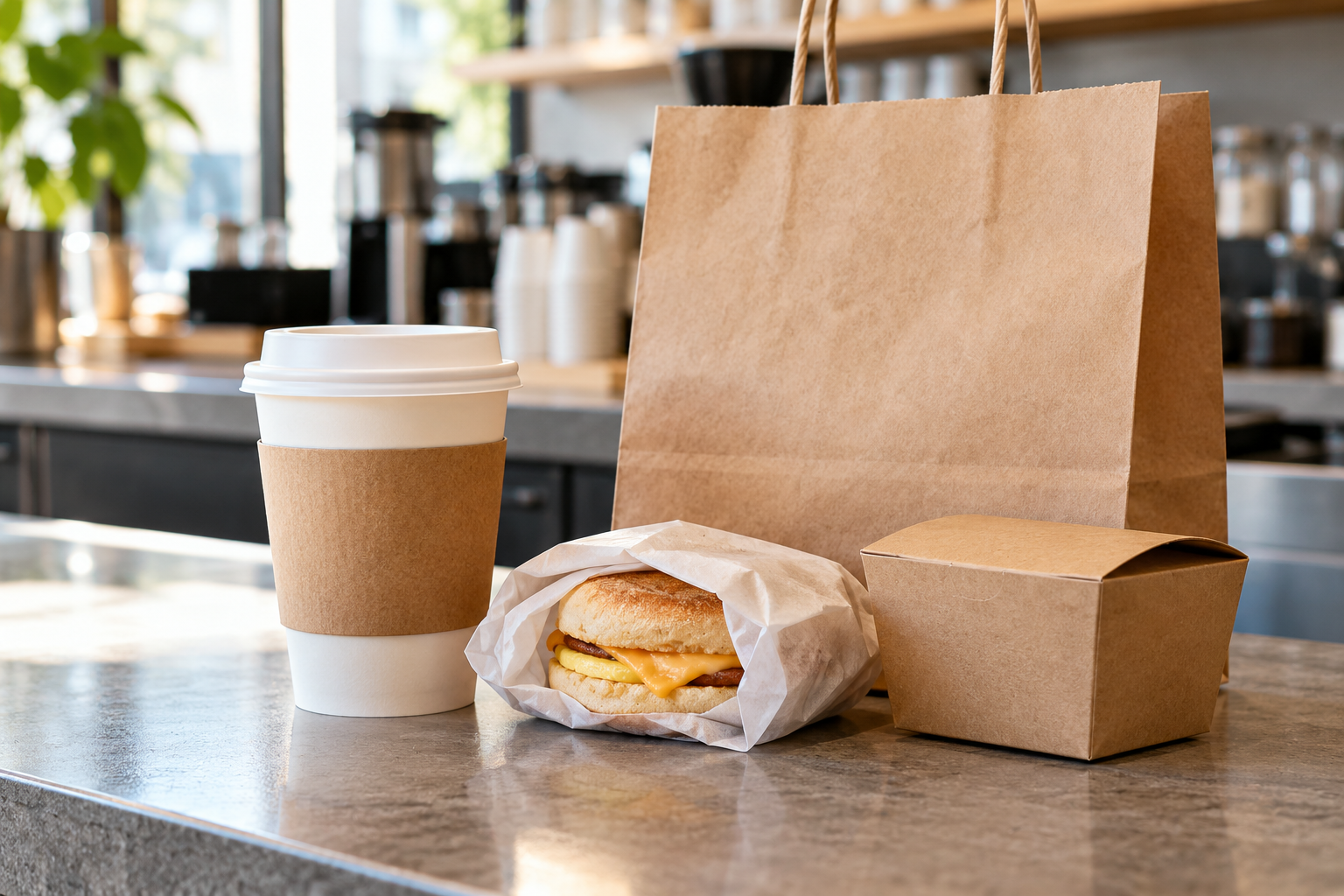
Table of Contents
1. Build a custom paper foodservice packaging list from the menu
Start with the items your staff uses at each station. A coffee bar may need hot cups, lids and sleeves. A takeaway counter might also need bowls, wrap and carry bags. Match the packaging to actual orders. If most breakfast orders include a beverage and a sandwich, check how those items fit together in the bag before choosing its dimensions.
Create a separate line for each size and print version. Add expected monthly use and note the locations that need the same item. That gives the supplier enough information to discuss practical order quantities and gives your team a reference for future replenishment.
2. Turn brand preferences into an order specification
For custom paper foodservice packaging, document the functional requirements alongside the artwork. List the use, dimensions, material, print version, units per case and delivery destination. Identify which items must fit together, such as a lid and bowl, and ask for samples that represent the proposed combination.
Send artwork with the current brand colors and any instructions for logo placement. If the same design appears on several products, ask for separate proofs using each format’s dieline. Store the approved proof and sample reference where both purchasing and receiving teams can find them.
3. Confirm who handles production and freight
Golden Sleeve uses overseas manufacturing and coordinates the order with a dedicated logistics network. Work with the US team to confirm what needs approval before production and what changes could affect the schedule. Ask for dates or ranges tied to milestones such as sample approval, production and local arrival so you can plan a launch around the full order cycle.

If you are reviewing DDP terms, confirm the named delivery point and any inspection or release steps in writing. The International Chamber of Commerce’s Incoterms overview provides background on the terminology. Your quote and purchase documents should identify the specific arrangement for your order.
4. Discuss US warehousing and local inspection
US warehousing can help align incoming stock with the timing of your locations’ needs. Discuss whether the proposed warehouse arrangement supports your intended delivery schedule and confirm where your responsibility for inventory begins. If locations need different quantities, prepare a destination list before asking for a quote.
For qualified DDP orders, Golden Sleeve describes a 50% production deposit with the remaining 50% due after successful inspection at a local bonded warehouse. Confirm eligibility and the inspection point for your custom paper foodservice packaging order. Agree on how to check carton counts, item construction, print and packaging condition, and identify the person who can approve release.
5. Set a reorder trigger from real consumption
Choose a reorder point that reflects actual weekly usage and the next confirmed replenishment window. A new store or seasonal promotion can change usage quickly, so check the numbers after launch. Track the same units throughout. A forecast in individual cups can lead to errors when orders and warehouse counts are recorded in cases.
Keep a record of product codes, approved artwork and the number of units per case. That record makes it easier to repeat a successful order or specify exactly what needs to change before the next production run.
Questions US buyers can ask before placing an order
Can locations use different artwork?
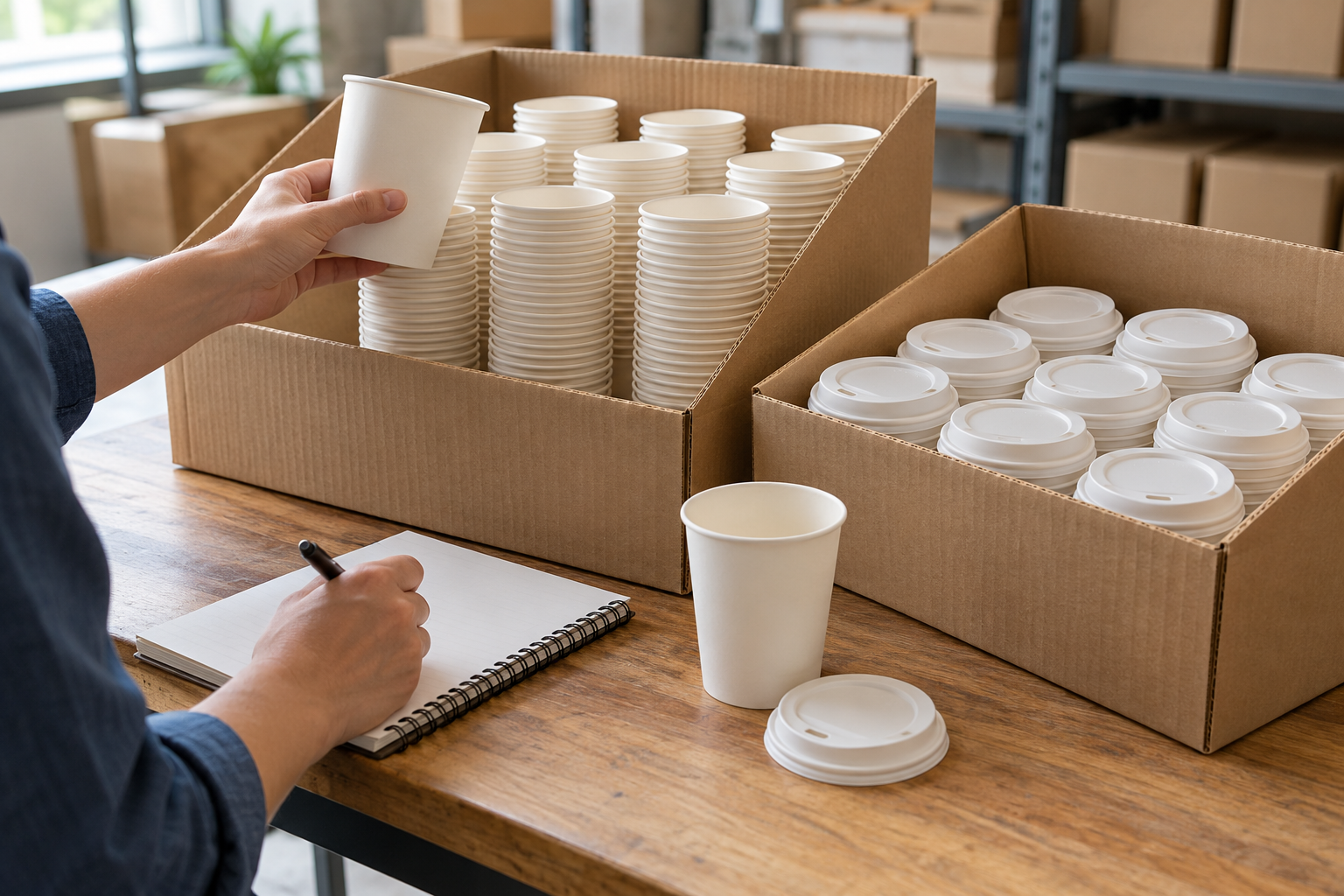
Ask which products can share a specification while carrying different artwork. Treat each print version as a separate line on the quote and receiving checklist. Even when cup size and material match, separate item codes can help warehouse and store teams pick the right cases.
What should a first quote cover?
Ask the US team to list units per case, order quantities, print requirements and the named delivery point. For custom paper foodservice packaging delivered on a schedule, share target dates and specify which location opens first. Ask which milestones will be confirmed after sample approval and which details could change if you revise the artwork.
Browse Golden Sleeve’s foodservice packaging range. For a custom paper foodservice packaging quote, send your item list, quantities and delivery ZIP codes, along with the dates your sites need stock.