Cold cups may look perfect when you fill them with iced coffee. But what happens after the drink sits on a counter for twenty minutes?
Imagine a customer ordering an iced latte on a warm afternoon. The barista fills a paper cup with ice and coffee, adds a lid, and hands over the drink. The cup looks attractive, and the customer is ready to leave.
A few minutes later, moisture begins collecting on the outside. The cup feels damp. If the material and moisture protection are unsuitable, the walls may lose firmness, making the drink uncomfortable to carry.
For cafés, bubble tea shops, juice bars, and restaurant chains, this is more than a packaging inconvenience.
Poorly selected cold cups can contribute to customer complaints, wasted beverages, and unnecessary packaging costs.
The challenge is that two cold drink cups may look nearly identical while having very different constructions.
So how can purchasing managers avoid ordering the wrong cups?
Three important mistakes deserve attention before your next bulk purchase.
1. Cold Cups: Why Condensation Resistance Matters
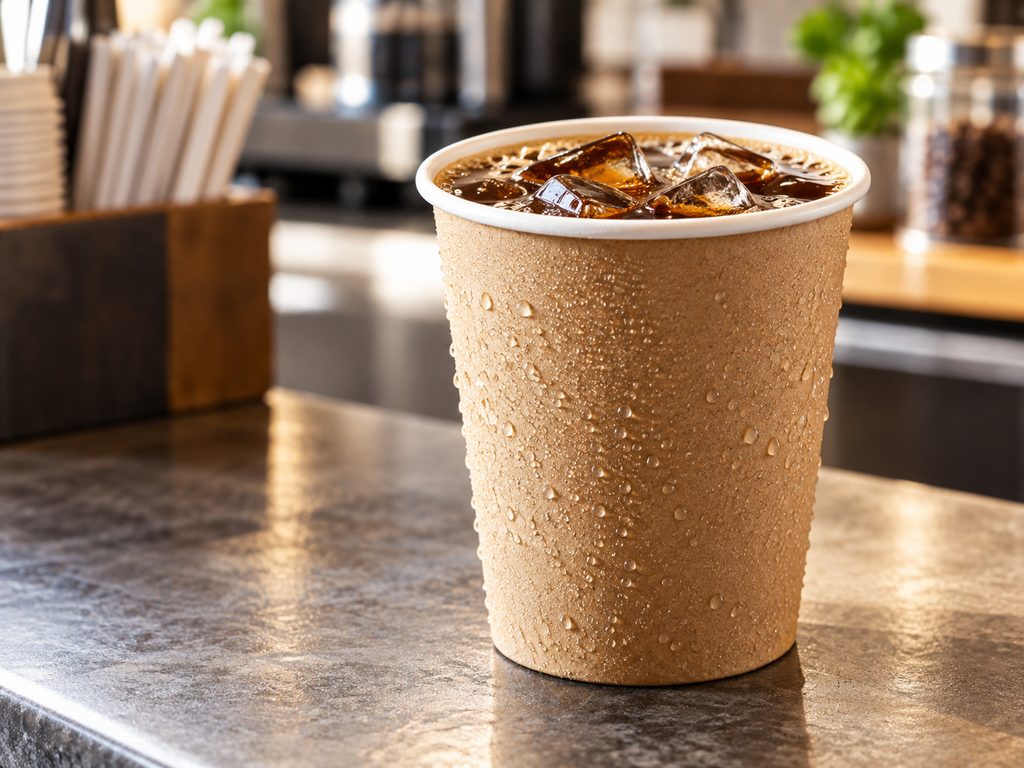
The first mistake is assuming that any disposable paper cup can handle iced beverages effectively.
Cold drinks create a different packaging challenge from hot drinks.
When a cup holds ice or chilled liquid in a warm environment, water vapor in the surrounding air can condense on its exterior.
This moisture may collect on the cup, the countertop, or the customer’s hands.
Why can paper cups become soft?
Paper-based packaging depends on its material construction and barrier design.
If the paper is exposed to excessive moisture without suitable protection, its strength and handling characteristics may be affected.
For a busy café, this can make an otherwise simple takeaway experience less convenient.
A customer may notice a damp cup, reduced firmness, or an uncomfortable grip.
The important point is that cold paper cups should be designed for the conditions in which they will actually be used.
How Golden Sleeve addresses moisture protection
Golden Sleeve offers Single-Wall Cold Paper Cups with waterproof coating on both the inside and outside.
According to its published product description, this design is intended to resist condensation-related moisture problems, softening, and collapse.
The company lists three standard capacities:
| Cold paper cup size | Published reference price | Listed quantity |
|---|---|---|
| 12 oz | $34.50 | 1,000 cups |
| 16 oz | $42.50 | 1,000 cups |
| 20 oz | $26.70 | 500 cups |
Custom exterior printing is also available.
The final price may vary depending on order volume, artwork, material, and delivery conditions.
These specifications provide a starting point for cafés and foodservice distributors evaluating disposable cold beverage packaging.
However, a waterproof coating should not be interpreted as a guarantee against every possible leak, spill, or handling problem.
Buyers should evaluate physical samples under their intended serving conditions.
Test the cup with ice, not just water
A useful purchasing evaluation should reflect what customers actually order.
For example, prepare an iced coffee in the proposed cup, then observe its condition over a realistic service period.
Check the exterior surface, bottom seam, grip, and structural stability.
Repeat the evaluation with the beverage sizes your business normally sells.
Key takeaway: Cold drink packaging should be evaluated for moisture exposure and structural stability, not merely appearance or advertised capacity.
2. Choosing Cold Cups for Different Iced Drink Applications
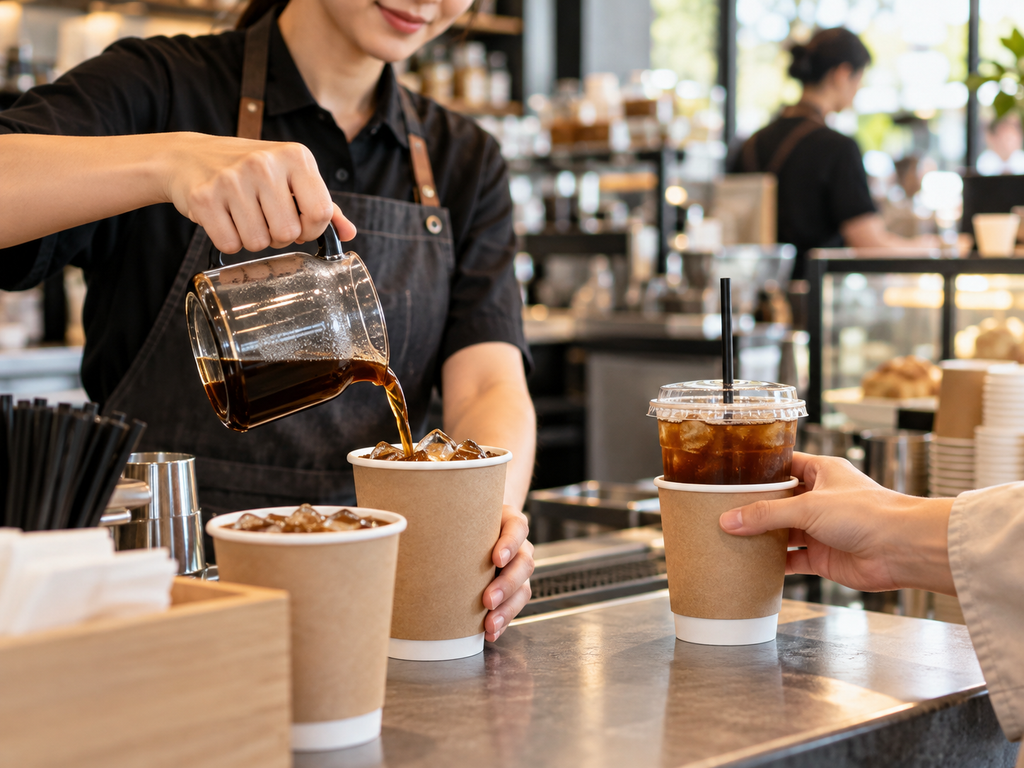
The second mistake is assuming that one paper cup specification is suitable for every cold beverage business.
A café serving iced americanos has different operational needs from a juice bar preparing fruit drinks or a fast-food restaurant selling iced soft drinks.
The cup may look similar, but the intended beverage, ice quantity, serving process, and takeaway conditions can differ.
Different drinks create different requirements
Before choosing paper cups for cold drinks, purchasing teams should consider how the cups will be used.
| Application | Main purchasing consideration |
|---|---|
| Iced coffee shop | Cup firmness and moisture resistance |
| Bubble tea shop | Beverage capacity and compatibility with the intended closure system |
| Juice bar | Suitability for cold beverages and handling |
| Fast-food restaurant | Consistent cup sizes and efficient counter service |
| Event beverage service | Storage, distribution, and handling convenience |
The purpose is not to assume that every product supports every beverage.
For example, if a business uses a specialty sealing film or a particular lid, compatibility with the chosen paper cup must be confirmed separately.
Why size selection affects daily operations
Golden Sleeve lists 12 oz, 16 oz, and 20 oz options for its Single-Wall Cold Paper Cups.
These sizes allow purchasing teams to discuss different beverage capacities, but the correct choice depends on the customer’s menu.
A coffee shop might offer a smaller iced drink alongside a larger takeaway option.
A restaurant chain may need several sizes to match its menu and portion standards.
When evaluating iced coffee cups, buyers should confirm the listed capacity, actual dimensions, and compatibility with their existing accessories.
A nominal capacity alone does not establish lid compatibility.
Custom printing should support the customer experience
Cold beverage packaging also creates a branding opportunity.
A customer may carry an iced drink through a shopping center, office building, or busy street.
The cup is visible throughout that journey.
Golden Sleeve offers custom exterior printing for its cold paper cups, allowing buyers to discuss branded packaging requirements.
However, artwork should be reviewed alongside the cup’s dimensions and print specifications.
Purchasing teams should confirm the final design, approved colors, print location, and physical sample before production.
This helps establish a consistent reference for repeat orders.
Key takeaway: The right cold cup depends on the beverage menu, operating conditions, accessory compatibility, and approved specifications—not simply the appearance of the cup.
3. Buying Cold Cups in Bulk: The Hidden Cost of Poor Specifications

The third mistake is choosing a cold drink cup supplier based only on the advertised unit price.
For restaurants and beverage chains, packaging is a recurring operating expense.
Saving a small amount per cup can appear attractive, especially when purchasing large quantities.
But a lower initial price may become less appealing if the product does not match the actual requirements of the business.
The problem with comparing price alone
Imagine a café chain ordering thousands of disposable cold cups for its summer beverage menu.
The purchasing team selects a low-priced product without fully checking its moisture resistance, dimensions, or compatibility with existing lids.
After delivery, employees discover that some components cannot be used together.
The business may need to order additional accessories, change its packaging setup, or revise purchasing specifications.
This hypothetical situation illustrates why clear requirements matter before an order is placed.
What should wholesale buyers check?
When comparing cold cups wholesale options, purchasing managers should document the following:
| Purchasing factor | What to confirm |
|---|---|
| Cup capacity | Required beverage sizes |
| Material construction | Paper type and moisture barrier |
| Lid compatibility | Actual rim dimensions and matching lid |
| Custom printing | Artwork, print location, and approved sample |
| Case pack | Number of cups per carton or order unit |
| Pricing | Unit basis and final quoted cost |
| Delivery | Transportation terms and destination |
| Inspection | Agreed acceptance criteria |
Clear specifications reduce the chance of misunderstandings between the buyer and supplier.
They also make it easier to compare quotations on a consistent basis.
An alternative approach to international purchasing
Golden Sleeve describes a purchasing structure for qualified orders in which buyers pay a 50% production deposit, followed by the remaining 50% after the goods arrive at a local bonded warehouse and pass inspection.
The published process involves:
- Approving the product specifications, material, printing, case pack, and sample.
- Paying the initial 50% deposit to begin production.
- Coordinating DDP transportation and local bonded-warehouse inspection.
- Paying the remaining 50% after successful inspection.
According to Golden Sleeve, buyers can inspect product construction, order quantity, printing, and packaging condition through this process.
Eligibility and commercial conditions must be confirmed with the supplier.
For buyers importing bulk cold cups, the value of this approach is the opportunity to review the delivered goods before completing the final payment.
This does not eliminate every possible product or shipping risk, but it introduces a clear inspection stage into the purchasing process.
Review food-contact suitability
In addition to moisture resistance and purchasing terms, beverage packaging must be appropriate for its intended food-contact application.
The U.S. Food and Drug Administration’s guidance on food-contact substances provides useful information on the US regulatory framework.
Buyers should request relevant material documentation and confirm suitability for the intended beverages and conditions of use.
A product description alone should not be treated as proof of a particular regulatory certification.
Key takeaway: A successful bulk purchase requires clear product specifications, realistic sample testing, and agreed inspection and delivery terms.
Conclusion: Choose Cold Cups That Fit Your Business
Choosing cold cups is not just about finding an affordable container for iced beverages.
The most important purchasing decisions begin with three questions.
First, is the cup designed to resist the moisture conditions associated with chilled drinks?
Second, does the cup match the beverage menu, serving process, and accessories used by the business?
Third, are the specifications and purchasing conditions clear before a large order is placed?
Golden Sleeve’s Single-Wall Cold Paper Cups are available in 12 oz, 16 oz, and 20 oz sizes, with inside and outside waterproof coating and custom exterior printing options.
For cafés, beverage shops, restaurant chains, and foodservice distributors, these details provide a useful basis for discussing packaging requirements.
The company also offers US-based support and a local inspection structure for qualified orders.
Looking for cold cups for your beverage business?
Explore Golden Sleeve’s Cold Paper Cups to review the published product options.
You can also contact Golden Sleeve to discuss sizes, estimated order quantities, custom printing requirements, and delivery details.
If your business also serves hot beverages, compare the requirements with [Golden Sleeve’s Hot