Ordering custom paper cups sounds simple: choose a size, add your logo, and place the order.
The problems usually show up later. Hot cups feel uncomfortable to hold. Cold cups soften during use. Printed colors look different from the approved artwork. Or the order is fully paid before anyone can inspect what arrived.
For coffee shops, restaurant chains, and event organizers, these issues can disrupt service and create unnecessary replacement costs.
Here are five practical ways to choose custom paper cups that fit your business—and make the buying process easier to manage.
Table of Contents
1. Choose Cups for the Drinks You Actually Serve
A cup that works for hot coffee may not be the right choice for an iced drink. Start with the beverage and how customers will use it.
For Coffee Shops and Breakfast Service
Hot coffee and tea need cups designed for hot beverage service.
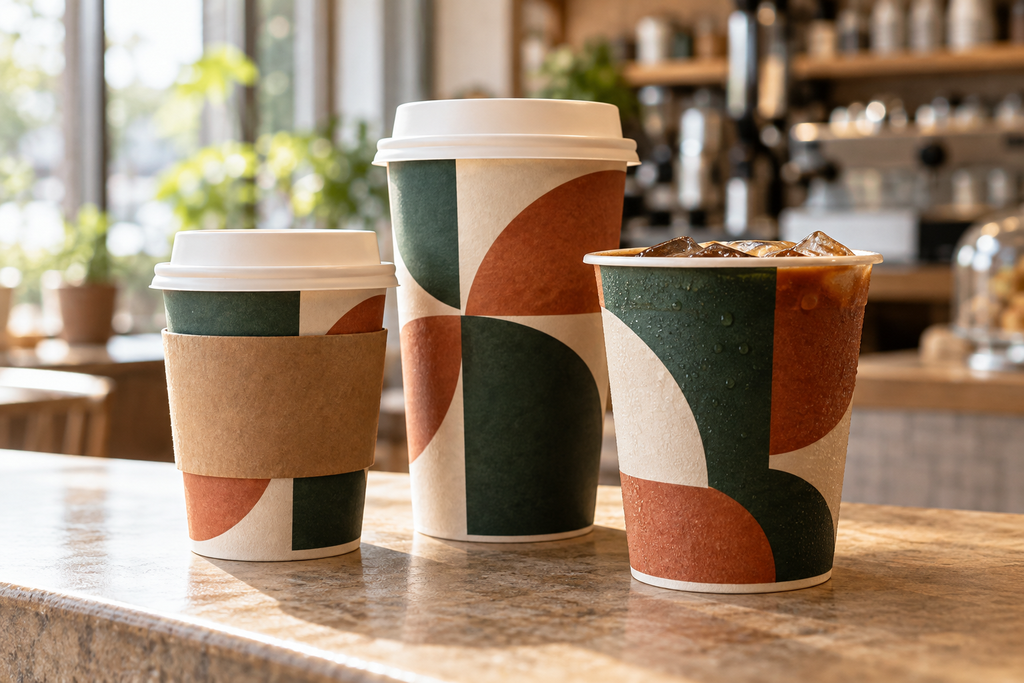
Golden Sleeve offers single-wall hot paper cups in 8, 12, 16, and 20 oz sizes, with custom exterior printing available. These options let buyers match cup sizes to their menu while adding branded artwork.
Before approving an order, test a sample with your usual drink and serving temperature. Check how it feels to hold and whether a sleeve is needed.
For Iced Coffee, Cold Drinks, and Takeout
Cold drinks create a different challenge: condensation.
Golden Sleeve’s single-wall cold paper cups feature waterproof coatings inside and outside to help resist moisture-related softening. They come in 12, 16, and 20 oz sizes and support custom exterior printing.
Test samples with your actual drink, including ice, over a realistic takeaway period. An empty cup cannot tell you how it will perform during service.
Beyond choosing between hot and cold cups, ask your supplier for food-contact documentation relevant to your market and intended use. The FDA’s guidance on food ingredients and packaging provides background on food-contact materials in the United States.
2. Match Cup Sizes to Your Menu and Storage Space
More cup sizes mean more stock to store, count, and reorder.
Before adding every available size to your order, identify the sizes your customers use most often.
| Business Scenario | What to Check |
|---|---|
| Daily coffee takeaway | Drink volume, grip comfort, and lid fit |
| Iced beverage service | Capacity after adding ice and resistance to condensation |
| Restaurant chains | Consistent specifications, case quantities, and replenishment needs |
| Trade shows and events | Expected attendance, serving method, artwork, and delivery deadline |
For example, if most orders fall into two drink sizes, start by requesting samples and quotes for those sizes. Add others when there is a clear operational need.
For multi-location businesses, a shared specification also helps each branch order the same product.
3. Approve a Physical Sample Before Printing in Bulk
Custom paper cups put your brand in customers’ hands. The design needs to work on a curved paper surface—not just on a screen.
Small logos can disappear. Fine text can become difficult to read. Artwork placed near the seam may look awkward.
Golden Sleeve recommends confirming the product size, print area, number of colors, and case pack before sampling. Its artwork guide also recommends vector files where possible and Pantone references for brand colors. Before production, buyers should review a physical sample for print placement, readability, and color.
Keep the design focused:
- Make the brand easy to recognize. Give the logo enough space.
- Keep the message short. A brief tagline is easier to read during everyday use.
- Test QR codes on the sample. Check that they scan reliably.
- Double-check event details. Dates, campaign names, and links can make leftover stock difficult to reuse.
Record the approved sample and artwork version so everyone works from the same reference.
4. Compare the Full Order Cost
A lower price per cup does not always mean a lower overall cost.
Two quotes may cover different materials, printing requirements, quantities, or delivery arrangements. Compare them against the same written specification.
Ask each supplier:
- Does the quote include custom printing?
- Are there separate sampling or setup charges?
- Are lids and sleeves included or quoted separately?
- What transportation and import-related costs are covered?
- What are the estimated production and transit times?
- How are shortages, printing defects, or damaged cartons handled?
Golden Sleeve states that final pricing depends on volume, artwork, material, and delivery terms. Its standard product pricing should therefore be treated as a reference rather than a final custom-order quote.
The clearest comparison is a quote for the complete order, based on the same requirements and delivery destination.
5. Agree on Inspection and Payment Before Ordering
One of the biggest purchasing concerns is paying in full before you can check the goods.
Cup construction, printing, order quantity, and packaging condition all need clear inspection criteria.
Golden Sleeve describes a payment arrangement for qualifying DDP orders: a 50% production deposit, followed by the remaining 50% after the goods reach a local bonded warehouse and pass inspection. Buyers should confirm eligibility, inspection procedures, and delivery details before placing an order.
Whatever payment structure you use, put these details in writing:
- Approved cup size, material, and construction
- Final artwork and sample reference
- Quantity per case and total order quantity
- Inspection requirements
- Procedures for resolving discrepancies
- Payment milestones and delivery arrangements
Clear specifications make it easier to identify a problem and agree on what happens next.
What to Prepare When Requesting a Custom Paper Cups Quote
A useful quote starts with a clear brief. Prepare the following information before contacting a supplier:
Application: Hot coffee, iced drinks, restaurant service, or an event.
Sizes and accessories: Required capacities, lids, and sleeves.
Quantity: Estimated first order and expected repeat demand.
Artwork: Logo files, brand colors, and printing requirements.
Delivery: Destination, ZIP code, and preferred arrival date.
Golden Sleeve offers custom paper foodservice packaging with US-based support for specifications, sampling, logistics, and after-sales resolution.
Planning your next order? Contact Golden Sleeve with your cup sizes, estimated quantities, artwork requirements, and delivery ZIP code to discuss suitable products and purchasing terms.
Frequently Asked Questions
Can the same paper cup be used for hot and cold drinks?
Do not assume a cup suits both applications based on appearance. Confirm the intended use with the supplier and test samples with your actual drinks.
What is the minimum order quantity for custom paper cups?
The reviewed Golden Sleeve product pages do not specify a universal minimum for custom orders. Ask for the minimum quantity for your chosen cup size and printing requirements.
How can I reduce printing mistakes?
Provide suitable artwork, specify brand colors, and approve a physical sample before production. Keep the approved sample and artwork version as references for inspection.
Does Golden Sleeve offer inspection before final payment?
Its website describes local inspection before the final 50% payment for qualifying DDP orders. Confirm the terms and inspection process for your specific order.