One sleeve that slips can undo the savings on an entire bulk order. When I help a buyer compare coffee cup sleeve sizes, I start with the actual cup, not the ounce label on a carton. At Golden Sleeve, we offer kraft sleeves for common 12–20 oz hot-cup applications, but I still want to confirm your cup model before you approve a printed run. Here is how I would narrow the choice, check the fit and prepare a useful sample request.
Ask our US team for a specification review and quotation.
In this guide
1. Why coffee cup sleeve sizes need more than an ounce label
A 12 oz description tells me a cup’s nominal capacity. It does not identify every curve of its sidewall. Cups from different manufacturers can vary in height, taper and outside dimensions. A sleeve that grips one model may sit too high or too low on another.
I therefore ask for the cup manufacturer and product code alongside the size. If your stores buy substitute cups when inventory runs short, include those too. A shared sleeve is useful only when it works on the cups your staff actually receive.
2. Compare coffee cup sleeve sizes with a cup-by-cup list
I use a simple comparison sheet before discussing artwork. The table below is a request format, not a universal dimension chart. Replace each blank with your own cup information.
| Cup in service | What I need | What to verify |
|---|---|---|
| 12 oz hot cup | Brand, model and dimensions | Sleeve grips without covering the rim |
| 16 oz hot cup | Brand, model and dimensions | Position and grip during handoff |
| 20 oz hot cup | Brand, model and dimensions | Comfort and stability with the filled cup |
| Any alternative model | Separate reference or sample | Approval independently of the main cup |
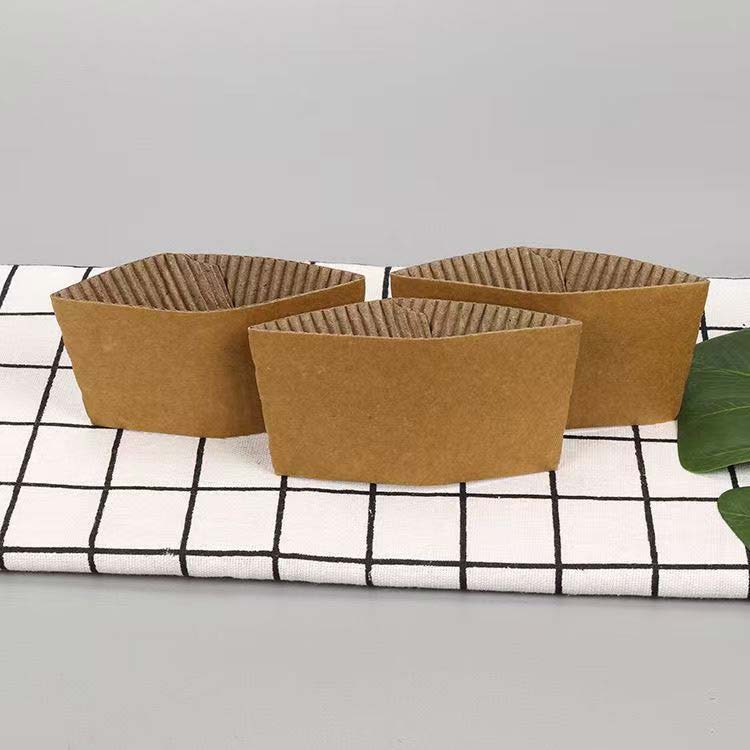
Our kraft paper cup sleeves are a starting point for this review. I would not extend their stated range to smaller cups or unusual shapes without checking a sample.
3. Measure coffee cup sleeve sizes consistently
Record the outside rim diameter, base diameter and total height in millimeters. Note where you want the sleeve to sit. A photograph beside a ruler can support the discussion, but a physical cup sample is more useful for final approval.
When comparing coffee cup sleeve sizes from different quotations, ask whether the figures describe a flattened sleeve, an unglued cutting blank or the assembled opening. Those measurements are not interchangeable. I want the supplier’s drawing and measurement convention attached to the specification so a reorder does not rely on a vague size name.
4. Test coffee cup sleeve sizes in your service routine
I suggest testing with the exact cup, lid and beverage conditions you plan to use. Have staff slide the sleeve into position and check that it seats without forcing or visibly distorting the cup. Follow your normal preparation, pickup and carrying sequence.
Record movement, cup deformation and handling comfort. A sleeve supports handling; it does not make every drink temperature safe to touch. Use your established hot-beverage procedures during trials. If different cup models perform differently, keep separate approval notes rather than averaging the result.
5. Approve artwork after checking coffee cup sleeve sizes
A sleeve can fit well while hiding an important part of the cup artwork. I check the assembled pair from the customer’s view. The logo should remain visible, the sleeve seam should not interrupt essential text, and the band should leave appropriate clearance near the lid.
If you use a printed cup and a printed sleeve together, send both designs. For a new program, our comparison of sleeves and printed cups can help you decide where to place the branding. Approve the actual dieline for the selected sleeve before production.
6. Request coffee cup sleeve sizes and samples together
For coffee cup sleeve sizes, my preferred inquiry includes cup references, measurements, intended sleeve position, quantity per design, artwork status and destination ZIP code. Add your required arrival date and whether you need one sleeve for several models.
I also ask buyers to keep the approved cup and sleeve together as a reference set. Label them with the product codes and approval date. This gives your purchasing team something concrete to compare when another store changes cup suppliers or a later order arrives.
Frequently asked questions
Can one sleeve fit 12, 16 and 20 oz cups?
It may, depending on the cup shapes and the selected sleeve. I would confirm each model using samples before combining demand into one sleeve order.
Do I need a separate sleeve for 8 oz cups?
Do not assume a sleeve intended for 12–20 oz cups will fit an 8 oz model. Send the smaller cup reference so we can review the available options.
What should I send if I do not know my cup dimensions?
Send the brand, product code and clear photographs first. We can discuss which measurements or physical samples are needed for a useful fit review.
For a multi-store rollout, I would ask one person to maintain the approved pairing list. Record which stores have completed the trial and which still use substitute cups. That makes it easier to spot a purchasing change before a sleeve-fit complaint appears at the counter.
Let us review your order before you commit
Send your specification, estimated quantity and delivery ZIP code to bill@golden-sleeve.com, or request samples and a written quote. We can review the product fit, printing requirements and delivery plan with you. Sample availability, order minimums, timing and commercial terms are confirmed for the selected project.
Further reading: Java Jacket’s manufacturer guidance on cup-specific fit and CupsPak’s explanation of sleeve measurement conventions. Supplier dimensions describe their own products; they are not Golden Sleeve specifications.