A custom coffee cup sample request should explain what your team needs to approve, which cup and accessories it uses, and when the decision is due. This walkthrough summarizes Golden Sleeve’s published sample checks and packaging suppliers’ public policies so cafés and distributors can prepare a usable request.
| Sample or proof | What it helps verify |
|---|---|
| Stock cup | Dimensions, handling, wall construction and fit with selected accessories |
| Digital proof | Layout, typography and logo positioning on the dieline |
| Previously printed cup | An example of the supplier’s printing and cup finish |
| Physical sample with your artwork | Printed appearance and placement on a formed cup |
1. Define the purpose of the custom coffee cup sample request
Start by telling the supplier what you need to approve. If the question is whether your existing lid seats properly, ask for a stock cup of the exact size and SKU plus the paired lid. If the concern is logo orientation, begin with a dieline proof. For brand color, finish or seam placement, ask whether a physical cup with your artwork is available and how closely it represents the intended production method.
Golden Sleeve lists single-wall hot cups in 8, 12, 16 and 20 oz and offers custom exterior printing. Include both the launch size and any other sizes with separately positioned artwork.
2. Ask for sample and shipping fees
Compare custom coffee cup sample costs using an itemized quote. Ask for the sample quantity, artwork or proof fee, print setup, additional colors or sizes, revisions and courier charges. Clarify whether a charge is per piece, per artwork, per size or per color. Ask whether any sample fee can be applied to the bulk order and have any credit recorded in the quote.
Public policies illustrate how sampling fees vary. CupsPak’s sample policy lists separately charged shipping and fees for custom printed paper samples. Promotion Choice’s paper cup listing distinguishes a standard sample fee from a quote for a sample bearing your own artwork. Ask Golden Sleeve for the current fees on your exact configuration.
See the Golden Sleeve guide to sample costs for an itemized list of charges to confirm.
3. Set milestones in the custom coffee cup sample request
Plan backward from the date the buying team needs to approve the bulk order. Ask for a date for receiving the proof, time for comments and revisions, time to make the physical sample, and estimated courier transit. Ask the supplier to state whether its estimate starts after artwork receipt, approval or payment. Add the review time your café operations or branding team needs after delivery.
Keep the production schedule separate from the sample schedule. A timeline measured from approved artwork can refer to sample dispatch or to the finished order arriving. Ask for both milestones and a target arrival date, especially if you need the cups for an opening, menu change or scheduled event.
If more than one team will sign off, record who is responsible for product fit, artwork and purchasing. Put their final review date in the custom coffee cup sample request. Ask for separate estimates when one size can be sampled from stock and another must be produced.
4. Send the cup specification and artwork files
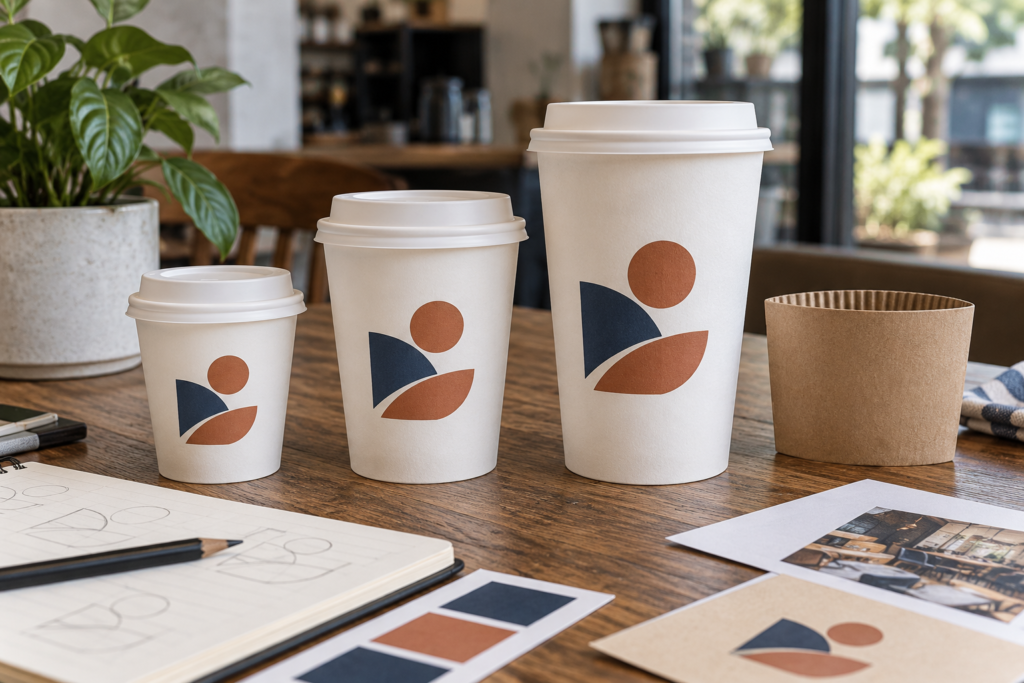
Send the exact cup size and construction, preferred lid and sleeve, vector artwork if available, color references and the delivery ZIP code. Use the supplier’s current template for the cup size. Identify the front, seam position or any artwork element that must remain visible with a sleeve fitted.
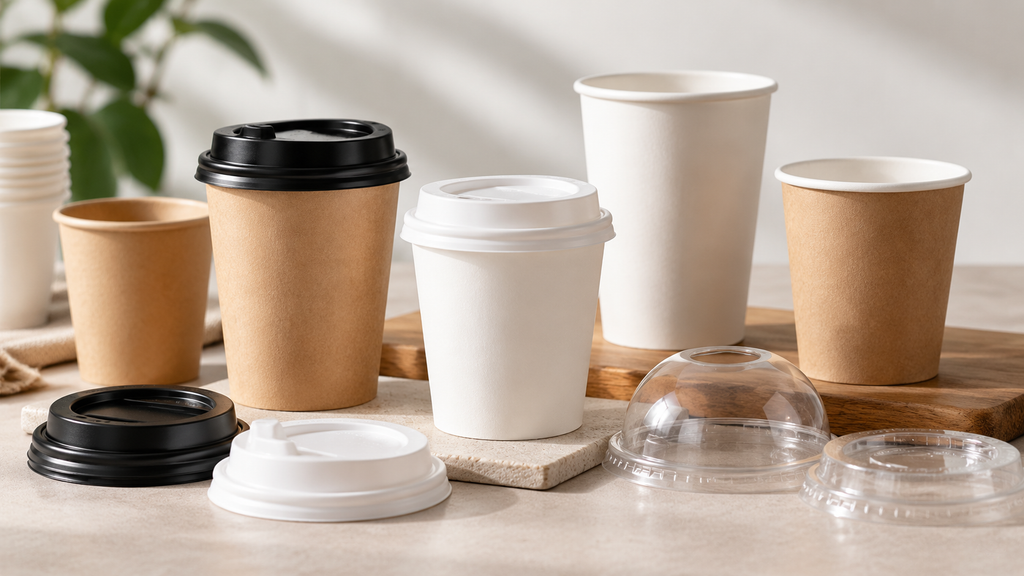
Ask for a sample with the same accessory combination your baristas will use. Golden Sleeve’s kraft sleeves are listed for 12–20 oz cups. Confirm the fit with your selected cup rather than relying on the cup capacity alone.
A clear subject line and one specification list make a custom coffee cup sample request easier to quote. Include the expected production quantity and destination. If you already buy a cup you want to match, add the manufacturer’s reference and ask the supplier how to send a physical comparison sample.
5. Approve the reference and attach it to the order
Check the sample against the proof and proposed product specification. Record the cup size, print version, lid and sleeve SKUs, approval date and any points the supplier needs to change. Keep the sample and the approved artwork version together for the receiving team. If the production approach changes, ask which approval steps need to be repeated.
Read Golden Sleeve’s guide to checking coffee cup samples for physical evaluation. Request sample availability, itemized fees and lead time with the cup size, intended beverage, artwork, expected bulk quantity, sample delivery ZIP and approval deadline.
An approval record can include the date, approving person, sample reference and any supplier-agreed changes. Tie the record back to the custom coffee cup sample request and include it in the purchase order. If one size is approved and another is still under review, identify them separately.
Frequently asked questions
What affects custom coffee cup sample costs? Ask for a configuration-specific quote. Size, color count, sample method, revisions and courier cost can each affect the total.
Can the digital proof be enough? It can support sign-off on layout. Request a physical cup when fit, handling or printed appearance is part of the approval. Ask whether proof revisions are included when reviewing the sample quote.
How long do samples take? Ask for estimated dispatch and arrival dates, and specify the date you need to finish reviewing them. Confirm what starts the clock and the target delivery date for the bulk order separately.
Can I combine custom coffee cup samples in one shipment? Ask the supplier to group stock cups, lids and printed samples when schedules allow. If the physical print sample takes longer, compare the cost of shipping separately with the time saved by checking fit first. Ask how the supplier will label custom coffee cup samples by size and artwork version so reviewers can identify them when they arrive.