A container can hold the right portion and still make the whole takeout order awkward to pack. When I compare round vs square containers with a buyer, I want to see the meal, the closed lid and the carry bag together. At Golden Sleeve, we list round paper food bowls and square paper containers. I would choose between them by the way your kitchen serves and delivers the food, then confirm the exact construction and intended use before discussing a bulk order.
Need a product match? Send our US team your requirements for samples and a quotation.
In this guide
1. Start round vs square containers with the actual portion
In a round vs square containers comparison, a capacity label does not describe the shape of your meal. A leafy salad, a compact rice portion and a layered entree can occupy the same stated volume very differently. I would portion the food into both trial formats and look at the space beneath the lid.
Check whether staff can fill the pack cleanly without pressing food against the closure. Review the customer’s first view after opening it. Too much empty space can weaken presentation, while an overfilled pack can interfere with closure or make the meal difficult to eat.
I would record the portion weight and serving utensil alongside the sample. This keeps the comparison fair between stores and prevents a slightly smaller portion from making one shape appear more effective than the other.
2. Compare round vs square containers as complete packs
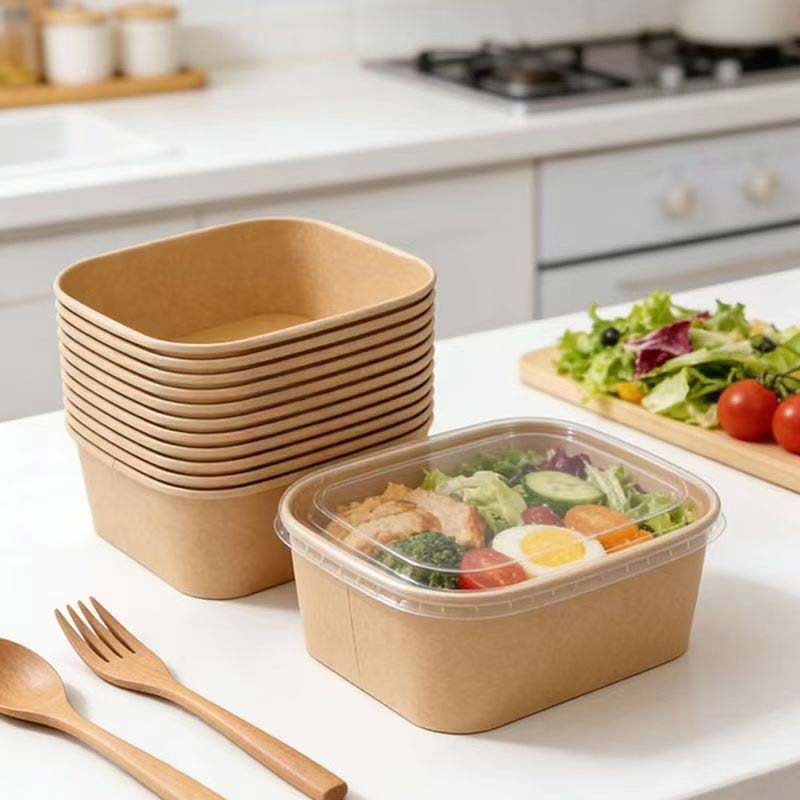
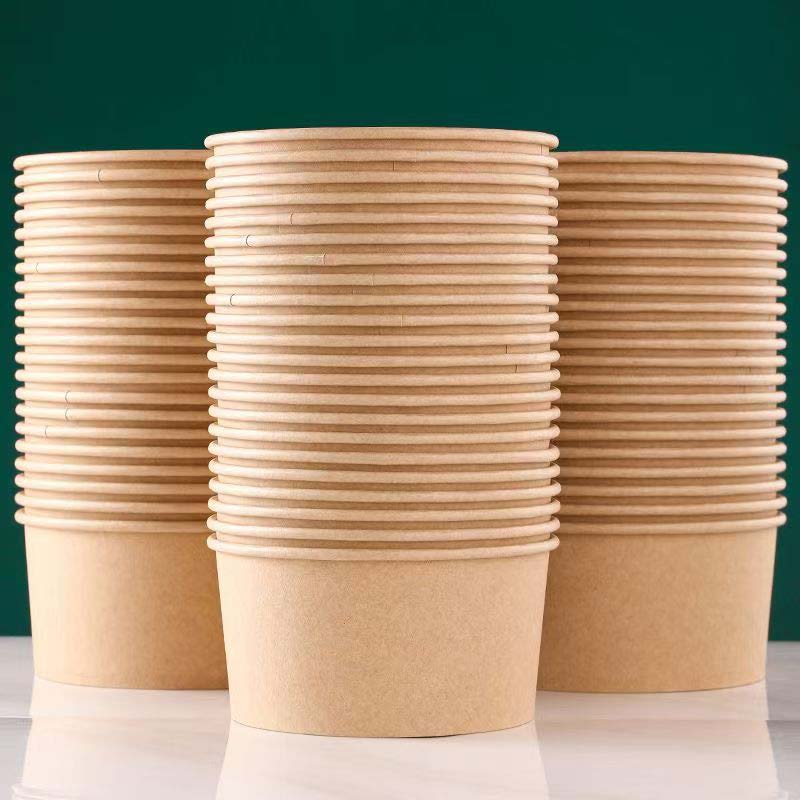
Our round paper food bowls are described for immediate foodservice use with stacking and rim performance in mind. Our square paper containers are described with a wide opening and flush-stacking design. These are product starting points, not a promise that shape alone solves every delivery problem.
| What I compare | Round format | Square format |
|---|---|---|
| Portion presentation | Trial your food in the selected bowl | Trial your food in the selected container |
| Closed footprint | Measure the widest diameter | Measure outside length and width |
| Bag arrangement | Check the space around each bowl | Check how packs sit beside one another |
| Lid engagement | Approve the exact bowl and lid pairing | Approve the exact container and lid pairing |
| Stacking | Test filled samples in the intended layout | Test filled samples in the intended layout |
I would keep the product codes visible throughout the trial. A comparison between two specific samples should not become a blanket claim about all round or square packaging.
3. Measure the bag footprint instead of assuming savings
Square formats can align neatly in a rectangular space, but the actual benefit depends on dimensions and the rest of the order. A wide lid overhang or a large footprint may change the arrangement. Measure the closed pack before deciding how many meals fit in a bag.
For round vs square containers, I would try one-meal and two-meal orders separately. Add the usual side packs, cutlery and napkins. Staff should be able to lower the containers into the bag and remove them without squeezing the sidewalls or disturbing the closure.
Our kraft carry bags should be matched to the selected arrangement. If your proposed container needs a larger bag, include that change when comparing the total packaging cost.
4. Check lids and stacking under real service conditions
A round rim does not automatically guarantee a leak-free pack, and square corners do not automatically create a weakness. I want to see how the selected lid engages, how the filled container supports the load and what happens during the ordinary pickup route.
Use your usual food, holding period and carrying method. Inspect the closed edge after filling, before dispatch and after the representative handling sequence. Record any movement, visible deformation or difficulty opening the pack. Keep the handling procedure consistent between the samples.
If the food will be hot, chilled or reheated, describe that before selecting the product. Do not infer microwave, oven or freezer suitability from the shape or paper appearance. The exact bowl, barrier and lid specification must support the intended conditions.
5. Compare round vs square containers by usable meal cost
When pricing round vs square containers, I compare the complete set: container, matching lid, any separate sauce packaging and the carry bag. Ask whether the quote includes lids and how many pieces are in each carton. A lower container price can be misleading when the closure is quoted separately.
Also review how the unfilled stock is stored at the preparation station. Count the carton space, access to lids and the number of product references staff need to distinguish. A format that packs well for delivery should still be practical to replenish during service.
For a fair round vs square containers quotation, use the same portion and order quantity. If minimums or printing requirements differ, keep those differences visible. Any forecast savings should be based on the actual proposed order rather than a general claim that one shape always costs less.
6. Approve round vs square containers with a menu matrix
I would finish with a short list showing the menu item, container code, lid code, portion and bag pairing. Include a photograph of the filled, closed pack and one of the completed takeout order. Purchasing and kitchen teams can then work from the same reference.
For a new supplier or format, run a limited service trial before replacing the entire range. Collect observations from the staff who pack the meals and those who handle customer pickup. Resolve any recurring closure or packing issue before increasing the quantity.
Send us your menu application, portion size, food conditions, preferred dimensions, quantity and delivery ZIP code. If you already use an approved sample, identify it. We can review the proposed round and square options without assuming that one universal format is right for every dish.
Questions buyers ask
Are square containers always more space-efficient?
They may suit a rectangular packing arrangement, but the actual result depends on the closed dimensions and other items in the order. I would compare complete packed meals.
Are round bowls automatically suitable for soup?
No. Confirm the exact product’s intended use, barrier, lid and serving conditions. A round shape alone does not establish suitability for liquids or high temperatures.
Can I use one container for my whole menu?
I would check every representative portion and service route before deciding. A small approved range can be practical, but the best number depends on your menu and packing trials.
Let us review the samples and delivered quote with you
Send the product references, estimated quantities, printing needs, delivery ZIP code and required arrival date to bill@golden-sleeve.com. You can also request a packaging review through our contact form. We will review the proposed specification with you; available sizes, samples, minimum quantities, pricing and timing are confirmed for the selected project.
Further reading: WebstaurantStore’s takeout container guide, Bioleader’s bowl and lid evaluation guide and LOKYO’s bowl specification overview. These sources provide general buying context. Their product dimensions, prices and commercial terms are not Golden Sleeve specifications.