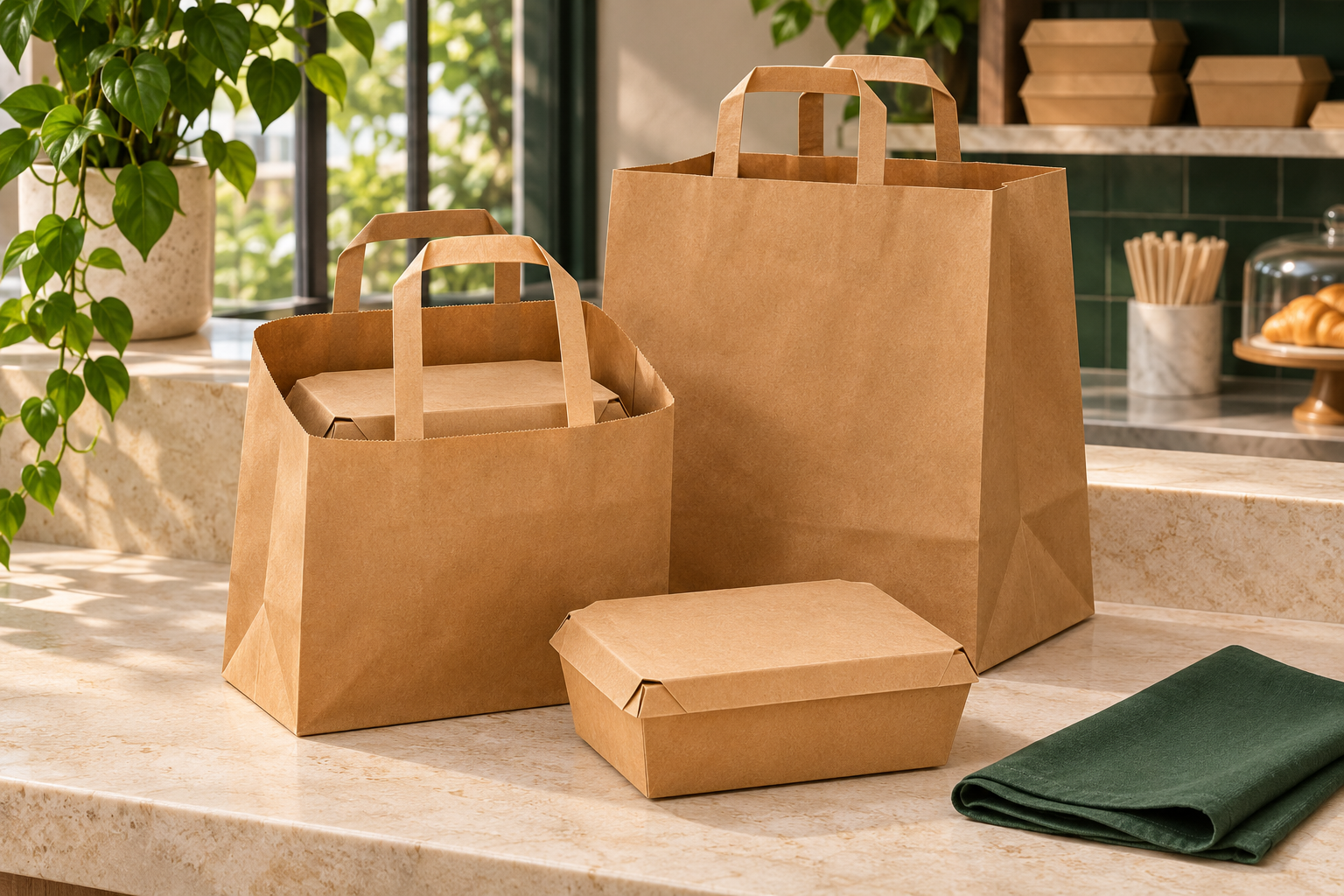
A meal box that only fits when tilted is a warning I would rather catch before you order thousands of bags. When I compare takeout bag sizes with a restaurant buyer, I start with the packed meal on the counter—not a bag labeled small, medium or large. At Golden Sleeve, our kraft carry bags are intended to help keep takeout containers upright. Here is how I would choose a practical size, check the complete order and turn the result into a clear purchasing specification.
Need a product match? Send our US team your requirements for samples and a quotation.
In this guide
1. Read takeout bag sizes as width, gusset and height
Ask the supplier to identify each dimension on a drawing. Width normally describes the front panel, gusset describes the expanded side depth, and height runs from the base to the top edge. Confirm the convention used on your specific quotation rather than assuming every catalog lists the numbers in the same order.
For a container to sit flat, both base dimensions matter. A wide front panel does little good if the expanded depth is too narrow for the meal box. I also check usable space inside the bag, since folded seams and the bag construction can affect how a rigid container slides into position.
When comparing takeout bag sizes, I keep the measurement unit next to every number. A purchasing sheet that mixes inches and millimeters can create an avoidable ordering error. Photograph the proposed bag open beside the container and save the supplier reference with the measurements.
2. Measure the complete meal before comparing takeout bag sizes
I want the outside dimensions of the closed container, including the lid overhang. Then I list the usual combinations: one entree, two stacked meals, a bowl with a side, or a family order. Measuring an empty container without its lid can underestimate the space needed at the packing station.
| Order format | Measure first | Check in the sample bag |
|---|---|---|
| One square meal container | Closed length and width | Flat entry and removal without tilting |
| Two stacked containers | Footprint and combined height | Lid clearance and stable positioning |
| Round bowl plus side | Widest points of both packs | A layout that does not squeeze the bowl |
| Mixed family order | Actual arrangement and packed weight | Base support and comfortable handling |
Our kraft paper takeout bags are listed with 120-gram paper. That material description is useful, but it is not a universal load rating. I would assess the exact bag construction and filled order before approving the format.
3. Leave room to pack, close and carry
When reviewing takeout bag sizes, I do not assume the smallest bag that accepts a box is the easiest one to use. Staff need enough space to lower the meal into place without dragging against the sides. Customers need to remove it without bending the container or catching the lid.
Check the height after all components are inside, including cutlery and napkins. If your operation folds the top or applies a closure label, allow for that routine during the trial. Do not use an empty-bag measurement to assume there will be room for a closure above a full stack.
I avoid prescribing one clearance allowance for every order. Container shape, handle design and the staff packing method all matter. A short trial with the actual meal tells us more than an attractive photograph of an empty bag.
4. Test takeout bag sizes under a representative load
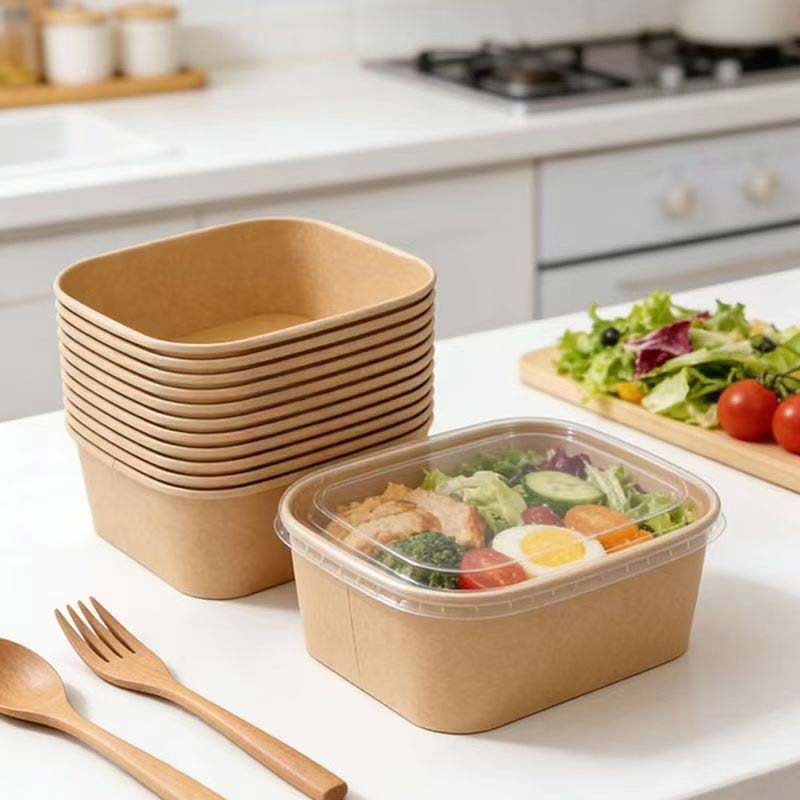
I would fill the containers to your normal portions, close them correctly and follow the ordinary pickup sequence. Observe the base, handles and attachment points while the bag is lifted, carried and set down. Keep the intended carrying route and your established handling procedures in mind.
Note whether containers shift into a tilted position or whether a stack presses against the handles. Record the contents and total packed weight with the observation. A successful trial with one lightweight sandwich does not establish suitability for several heavy meal bowls.
A paper carry bag is outer packaging. Keep sauces and wet foods inside suitable closed containers or wrappers. If a container leaks during the trial, address the container and closure pairing rather than expecting the bag to contain the liquid.
5. Keep a simple approved size range
Too many takeout bag sizes can slow the counter and complicate reorders. Too few can force staff to squeeze large meals into an unsuitable format. I would group your common order combinations, then identify the smallest practical set that passes the packing trials.
Label the approved combination at the packing station with a photograph and bag code. If a new menu item changes the container footprint, review the bag pairing before launching it. Our square paper containers and round paper bowls should each be considered with their actual dimensions and intended use.
For a chain, ask a second store to repeat the trial. A difference in portioning or packing sequence may reveal a problem that the first location did not encounter.
6. Request takeout bag sizes with a complete quotation brief
Send the bag dimensions if known, the container references, packed order examples, quantity per size, artwork requirements and destination ZIP code. Tell us whether the bags are for pickup, delivery or catering, and include the required arrival date.
I would ask the quotation to state the bag code, paper specification, handle construction, pack count and delivery responsibilities. Confirm any sampling or printing charges separately so you can compare equivalent offers. A price per carton means little until the number of bags is clear.
Keep the approved takeout bag sizes, samples and trial notes with your order record. When another shipment arrives, compare it with that reference before sending the whole batch to stores. This makes future discussions about takeout bag sizes much more precise.
Questions buyers ask
Can I choose a takeout bag by its small or large label?
I would use the label only as a starting point. Confirm the dimensions and try the closed meal containers in the proposed bag.
Does heavier paper automatically carry more food?
Paper weight is one factor. The base, seams, handles, moisture exposure and packed arrangement also affect performance, so review the exact bag under a representative load.
Can one size serve every order?
Sometimes a small range works well, but I would approve it against each common meal combination. A bag that works for one entree may not suit a family order.
Let us review the samples and delivered quote with you
Send the product references, estimated quantities, printing needs, delivery ZIP code and required arrival date to bill@golden-sleeve.com. You can also request a packaging review through our contact form. We will review the proposed specification with you; available sizes, samples, minimum quantities, pricing and timing are confirmed for the selected project.
Further reading: VistaPrint’s bag sizing and handle overview and MrTakeOutBags’ container-fit guidance. These sources provide general buying context. Their product dimensions, prices and commercial terms are not Golden Sleeve specifications.