Custom sandwich paper from Golden Sleeve pairs a printable sheet with a wrap designed to help contain oils and moisture around burgers, sandwiches and fried foods. The product page lists PFAS-free stock, KIT 5 grease resistance and a 14 × 14 inch sheet in yellow or white. Request wrap samples and a bulk quote with your menu items, artwork needs, quantity and delivery ZIP code.
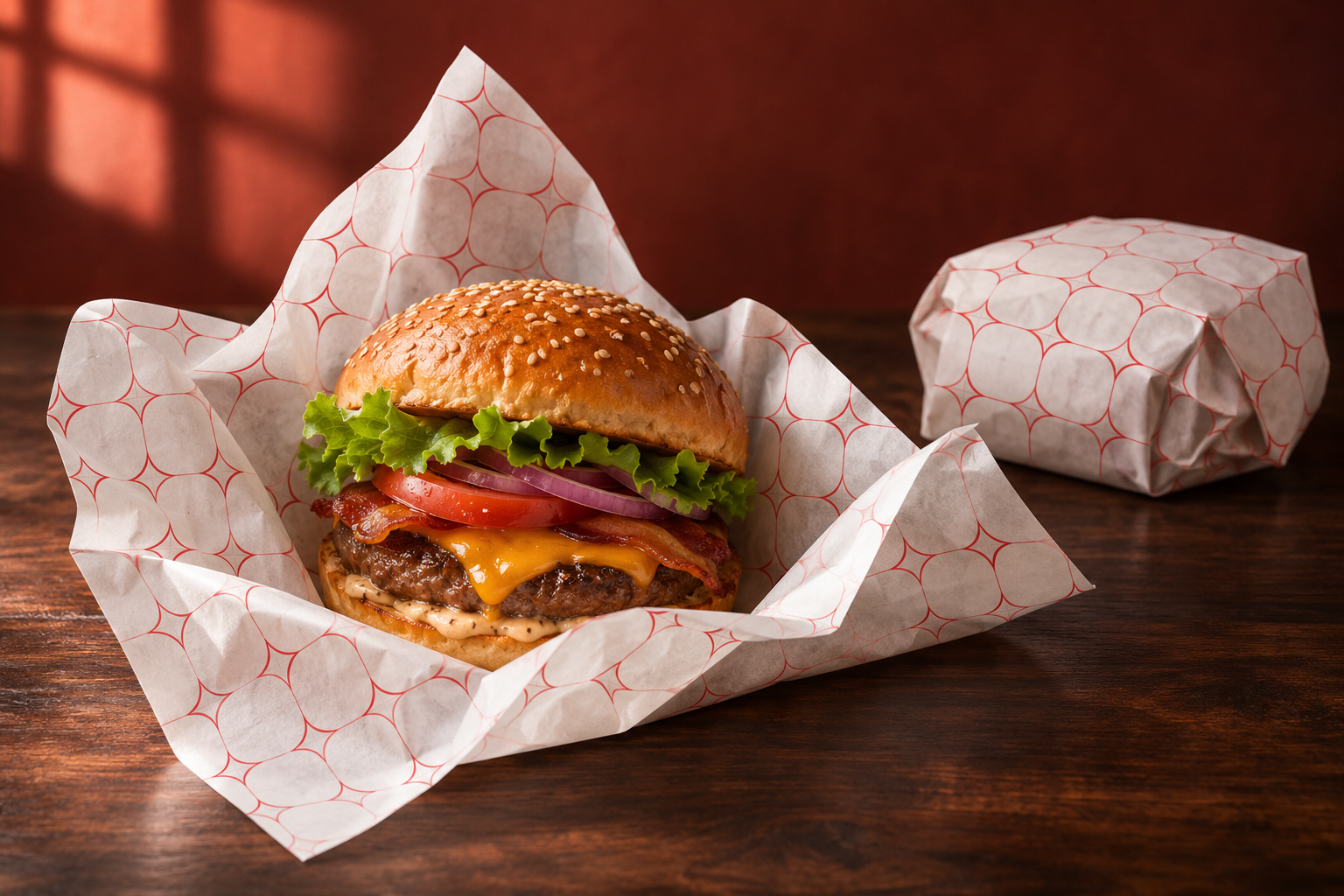
Table of Contents
1. Trial custom sandwich paper on a complete burger
Start with the burger as served, including the bun, patty and usual toppings. Fold the sample using the staff’s normal method, then leave it for a representative collection wait. Inspect the paper beneath the food and around the folds.
Repeat with an item that has a different oil or moisture profile. A sample trial gives the team a practical reference for deciding which menu items suit the wrap. Record the recipe, wait time and packing method so the result can be compared across locations.
2. Specify the grease resistance with the order
Golden Sleeve lists KIT 5 grease resistance on its sandwich paper page. Put that specification beside the item reference in your purchasing record and ask for supporting documentation if your approval process requires it.
For custom sandwich paper, describe the foods and conditions the supplier should review. Include sauces, the usual service temperature and expected time before consumption. Ask for documentation for the proposed material and printing construction that covers the intended food contact use.
3. Check sheet coverage and fold overlap
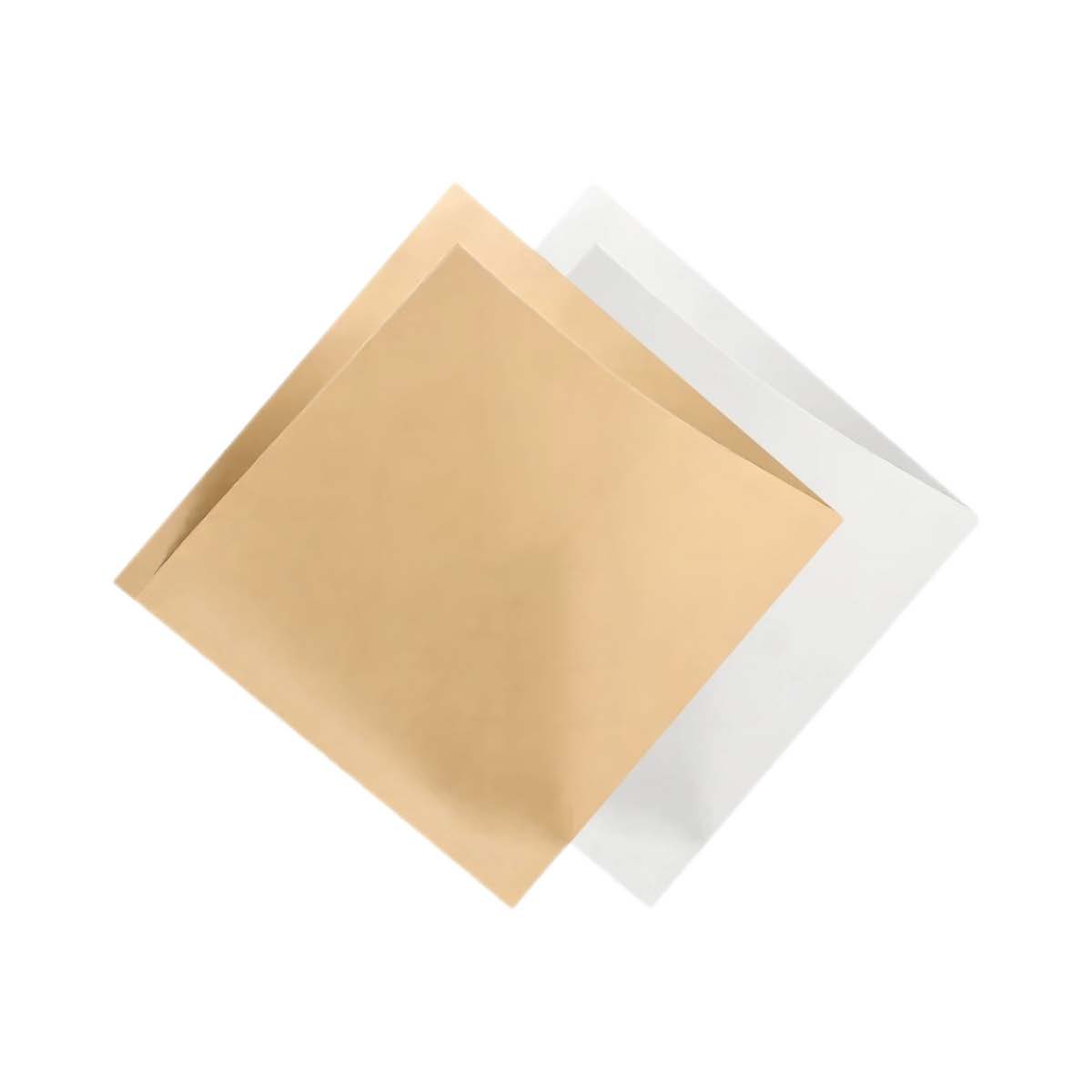
A 14 × 14 inch sheet gives staff a defined starting format. Place the widest and tallest standard portions on samples and check the overlap after folding. The wrap should fit your selected presentation and be easy for customers to open.
If the same custom sandwich paper will also line a tray or container, trial that use separately. Check how the sheet sits at the corners and whether it leaves the food presented as intended. Record the approved sheet orientation for staff preparing repeated orders.
4. Design the artwork around the folded package
Ask for the proposed print layout before preparing the final design. Review where the logo appears after wrapping a burger and after lining a tray. A repeated pattern and a single large logo can produce different results once a sheet is folded.
Choose yellow or white stock for the sample review and ask the team to confirm the intended food contact side. Keep essential brand details visible on the finished package. Approve the artwork version alongside the stock color so future orders repeat the same construction.
5. Convert daily use into a bulk quote
Golden Sleeve lists 4,000 sheets per case. A location using 500 sheets per operating day would use one case in about eight days. Adjust the estimate for recipes that need separate sheets and for stock used as tray liners.
For custom sandwich paper, provide the initial volume and expected reorder demand separately. Include the destination list and any artwork variations by store. Ask Golden Sleeve to identify the case pack, applicable print charges and delivery arrangement on the quote.
Request printed food wrap samples
Send the menu items, stock color preference, artwork and delivery ZIP code to the US team. Include the target date for your rollout and any material documents your purchasing process requires. Discuss custom sandwich paper samples and bulk pricing before approving production.
Find the Golden Sleeve office in San Mateo, California on Google Maps.