
For coffee shops, café chains, and foodservice packaging distributors, choosing the right coffee cup lids is an important part of everyday beverage service.
A coffee shop may purchase 12 oz or 16 oz paper cups from one supplier and order lids separately from another. Both products may appear suitable based on their descriptions.
However, when the lids arrive, some may not fit the cups correctly.
A lid may feel too loose, require excessive force to attach, or fail to engage evenly around the cup rim.
For businesses purchasing packaging in large quantities, this can create an expensive problem: a substantial inventory of coffee cup lids that cannot be used with the cups already in stock.
At Golden Sleeve, we supply paper cups and cup lids as part of our foodservice packaging range.
We understand that selecting a lid involves more than matching the beverage capacity printed on a product description.
This article explains why cup and lid compatibility problems occur and which factors businesses should evaluate before placing a wholesale order.

Why Coffee Cup Lid Compatibility Matters
For a busy coffee shop, packaging needs to work consistently throughout the day.
Employees should be able to place lids on cups without repeatedly adjusting them or searching for alternatives.
When lids do not fit properly, several operational problems can occur.
Unusable Packaging Inventory
A business may receive thousands of lids only to discover that they are incompatible with its existing paper cups.
Even if the lids themselves are manufactured correctly, they may not be suitable for the cups being used.
This creates an inventory problem that could have been avoided through compatibility checks.
Slower Beverage Service
During busy morning hours, baristas need to prepare drinks efficiently.
If employees struggle to attach lids, beverage preparation can take longer.
Repeatedly checking whether a lid is properly seated also interrupts the normal workflow.
Additional Purchasing Costs
When a bulk order of lids cannot be used, the business may need to purchase replacements.
The original products may also require storage, return arrangements, or another solution.
These additional costs can affect the overall value of the packaging purchase.
Inconsistent Packaging Across Locations
Coffee chains may purchase cups and lids for multiple stores.
If different locations use cups with different rim dimensions, one centrally purchased lid may not fit every cup.
Maintaining clear packaging specifications is particularly important for businesses operating across several locations.
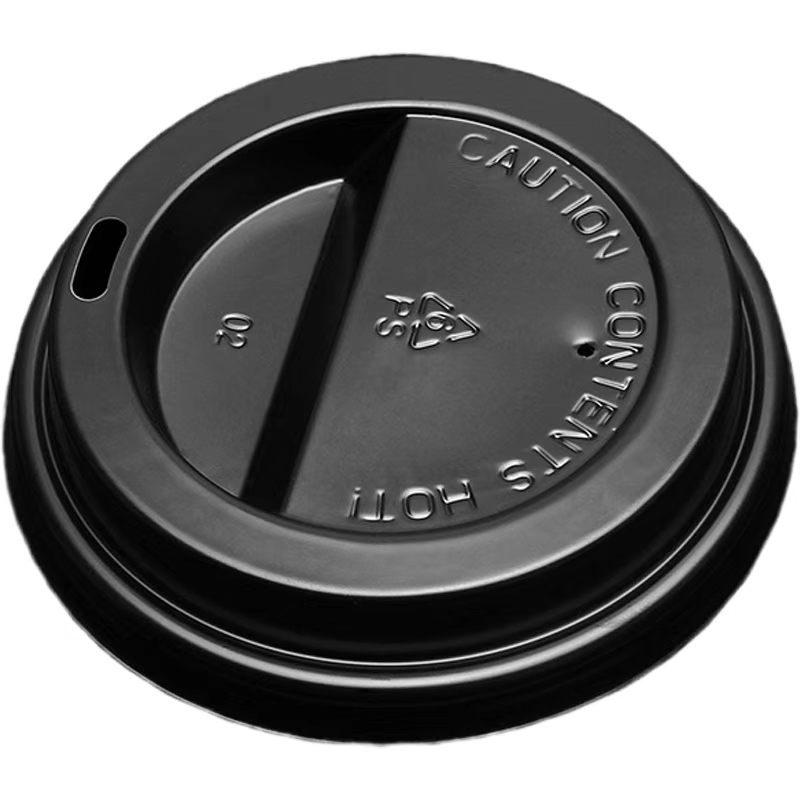
Why Don’t All Coffee Cup Lids Fit the Same Size Cups?
A common misunderstanding is that cup capacity determines lid compatibility.
For example, buyers may assume that every lid described as suitable for a 12 oz coffee cup will fit any 12 oz cup.
However, cup capacity and cup rim dimensions are different specifications.
Two paper cups can hold similar beverage volumes while having different top diameters and rim profiles.
Cup Capacity Does Not Define Rim Diameter
Cup capacity describes the approximate volume a container is designed to hold.
It does not necessarily identify the diameter of the cup opening.
Manufacturers may produce cups with different proportions, even when their stated capacities are the same.
A taller, narrower cup and a shorter, wider cup may hold similar amounts of liquid but require different lids.
Cup Rim Profiles Can Differ
Paper cups typically have a formed rim around the top edge.
The dimensions and shape of this rim influence how a lid attaches.
A lid designed for one rim profile may not engage securely with another.
This means that nominal diameter alone may not provide enough information to confirm compatibility.
Lid Designs Use Different Engagement Structures
Different cup lids may have different edge profiles and attachment mechanisms.
Some rely on a snap-on fit around the rolled rim, while others use alternative structural designs.
These differences affect which paper cups they can accommodate.
Materials and Temperature Can Influence Performance
Hot beverages expose packaging to elevated temperatures.
The cup and lid materials must be suitable for the intended serving conditions.
Changes in temperature and handling conditions may influence how packaging components perform.
For this reason, buyers should consider the intended beverage application when evaluating lid compatibility.
5 Essential Checks Before Ordering Coffee Cup Lids
Businesses can reduce the risk of purchasing incompatible lids by reviewing the complete cup-and-lid combination.
1. Confirm the Actual Cup Rim Diameter
The first step is to identify the dimensions of the paper cup opening.
Do not rely only on the cup’s stated capacity.
A product described as a 12 oz cup may require a different lid from another manufacturer’s 12 oz cup.
When discussing coffee cup lids with a supplier, provide the relevant cup dimensions or the exact cup model whenever possible.
2. Check the Cup Rim Profile
The shape of the cup rim is just as important as its diameter.
The lid needs to engage correctly with the rim to achieve the intended fit.
If the lid is too loose, it may not remain properly attached during normal handling.
If the fit is excessively tight, employees may struggle to attach it without deforming the cup or lid.
The correct fit should be evaluated using the actual products.
3. Match the Lid to the Beverage Application
A café serving hot coffee has different packaging requirements from a business selling iced beverages.
Coffee cup lids should be suitable for the temperature and intended use of the drinks being served.
For hot beverages, buyers should review the manufacturer’s stated product application.
At Golden Sleeve, our product range includes paper cups and cup lids for foodservice packaging.
Specific lid compatibility and suitability should be confirmed for the cup and beverage application involved.
4. Evaluate the Cup and Lid Together
Reviewing a lid by itself may not reveal how it will perform with a particular paper cup.
A more useful approach is to evaluate the components together.
When samples are available, businesses can check whether the lid attaches evenly and remains properly seated during ordinary handling.
They can also assess whether the combination is practical for employees to use during beverage preparation.
A successful fit check does not guarantee that a cup will be completely leakproof under all conditions.
5. Keep Specifications Consistent Across Repeat Orders
For businesses purchasing packaging regularly, maintaining consistent product specifications can reduce confusion.
Record the approved cup model, rim dimensions, lid model, and relevant application requirements.
For multi-location coffee chains, these records can help purchasing teams identify which lids are intended for each cup.
Clear specifications also provide a useful reference when discussing future orders with suppliers.
How the Right Coffee Cup Lids Support Daily Operations
When cups and lids are properly matched, beverage businesses can reduce avoidable packaging difficulties.
More Efficient Drink Preparation
Employees can work more consistently when lids are designed to fit the cups in use.
This reduces the need to search for alternative lids or repeatedly adjust poorly fitting components.
Better Inventory Management
Confirming compatibility before purchasing in bulk helps reduce the risk of accumulating unusable packaging.
For distributors and coffee chains, this can make stock planning more straightforward.
More Consistent Customer Experience
Customers expect takeaway drinks to be packaged appropriately.
A correctly fitted lid supports normal handling and helps reduce problems associated with loose packaging components.
Clearer Purchasing Requirements
When businesses understand which specifications matter, they can communicate more effectively with suppliers.
This is particularly useful when sourcing paper cups and lids for repeat orders.
Golden Sleeve Paper Cups and Lid Solutions
At Golden Sleeve, we supply foodservice paper packaging products, including paper cups and cup lids.
Our product range allows beverage businesses to explore packaging options for different operational requirements.
Paper Cup Packaging
Our paper cup offerings support takeaway beverage applications.
For businesses sourcing paper coffee cups, understanding the intended capacity, dimensions, and lid requirements is an important part of product selection.
Cup Lid Options
Our product range includes paper lids and plastic lids.
These provide different material options for foodservice packaging buyers.
The availability of a particular lid style does not mean it will fit every paper cup.
Compatibility should be confirmed according to the specific products being considered.
Customization Support
Golden Sleeve supports customization discussions involving product dimensions, exterior printing, and packaging based on documented specifications.
For businesses purchasing branded paper cups, it is useful to consider cup-and-lid compatibility alongside the appearance of the finished packaging.
Why Work with Golden Sleeve?
Golden Sleeve combines direct manufacturing resources with US-based customer support.
Our manufacturing base includes paper cup forming, high-speed die cutting, folding and gluing, and blow molding.
We also support specifications, sampling, logistics, and after-sales coordination through our US-based team.
For businesses purchasing coffee cup lids in bulk, these capabilities are relevant to three important requirements.
Clear Product Specification Communication
We understand that cup capacity alone is not sufficient to establish lid compatibility.
Our team can discuss the available product specifications and help buyers clarify their packaging requirements.
Manufacturing and Customization Coordination
Our direct manufacturing structure supports communication between customer requirements and production resources.
For businesses exploring custom packaging, this can help reduce unnecessary communication layers.
US-Based Support
Our US-based team supports customer communication, sampling coordination, logistics, and after-sales matters.
This provides American foodservice buyers with a local contact when discussing their packaging needs.
Actual product availability, sampling arrangements, and compatibility must be confirmed for each inquiry.
Find Suitable Coffee Cup Lids for Your Business
Purchasing coffee cup lids based only on cup capacity can lead to unnecessary compatibility problems.
Differences in rim diameter, rim profile, lid structure, and intended application can affect whether a lid fits correctly.
For coffee shops, beverage chains, and packaging distributors, checking these details before purchasing in bulk can help reduce unusable inventory and operational disruption.
At Golden Sleeve, we offer paper cups and cup lids as part of our foodservice packaging range.
Looking for coffee cup lids for your business?
Contact Golden Sleeve to discuss the paper cups you currently use, your required lid specifications, estimated order quantities, and delivery requirements.
Our team can review the available product options and discuss compatibility requirements for your application.
Contact Golden Sleeve today to request product information or a quotation.