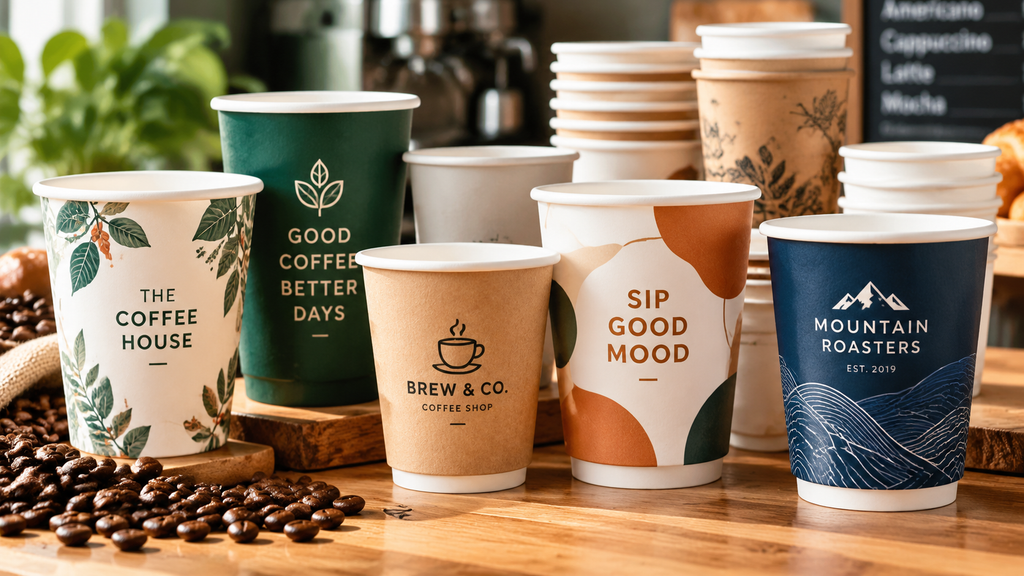
Custom paper cups are a practical packaging choice for coffee shops, restaurant chains, beverage brands, and foodservice businesses. Beyond holding drinks, they provide an opportunity to present your brand consistently across takeaway orders, in-store service, and customer interactions.
However, ordering custom paper cups involves more than adding a logo to a cup. Businesses need to consider cup types, dimensions, materials, printing requirements, sample approval, order quantities, and delivery arrangements.
Whether you are launching a new coffee brand or sourcing packaging for an established foodservice business, understanding these factors can help you plan a more effective purchasing process.
In this guide, we explain seven important considerations when sourcing custom paper cups and how to prepare for a bulk order.
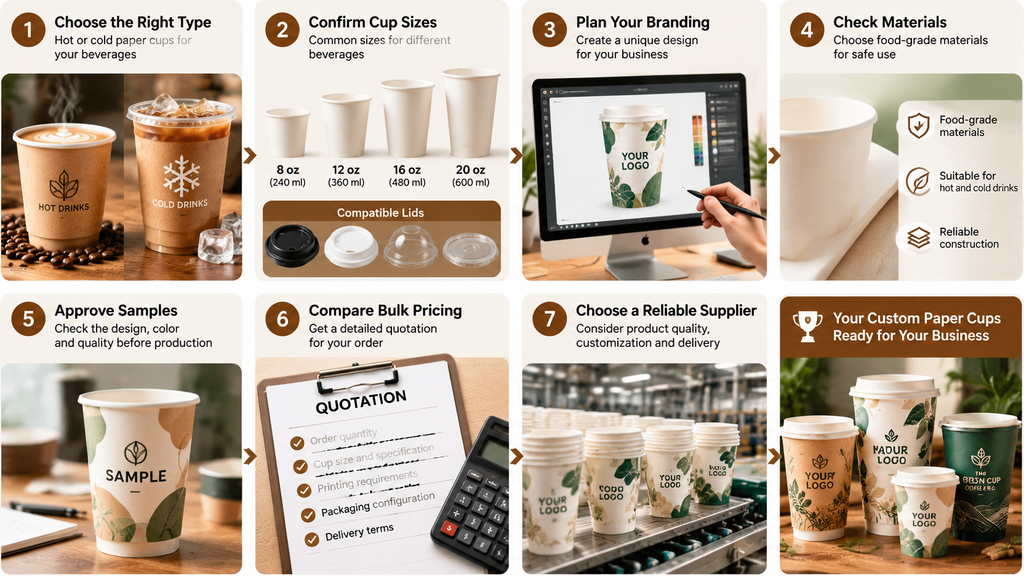
1. Choose the Right Type of Custom Paper Cups
The first step is selecting paper cups that match your beverages and service requirements.
Different drinks may require different cup specifications, so identify how the cups will be used before discussing customization.
Hot Paper Cups
Hot paper cups are commonly used for coffee, tea, hot chocolate, and other warm beverages.
For takeaway coffee businesses, single-wall paper cups can be paired with compatible coffee cup sleeves to provide an additional layer of heat protection and improve handling comfort.
Golden Sleeve offers single-layer paper cups as part of its foodservice packaging range. Buyers can discuss their intended applications and required specifications with the company.
Cold Paper Cups
Cold beverage packaging may need to accommodate condensation and moisture exposure.
If your business serves iced coffee, cold tea, or other chilled drinks, explain these requirements when requesting a quotation. Your supplier can help determine which available cup construction is appropriate.
Questions to Ask Before Ordering
Before selecting custom paper cups, confirm:
- What beverages will the cups hold?
- What capacities and dimensions are required?
- Will the cups be used for takeaway, dine-in, or delivery?
- Are compatible lids or coffee cup sleeves needed?
- Will different beverage sizes require different designs?
Buying tip: Finalize the cup type before preparing your artwork. The selected cup dimensions and printing area will influence the design.
2. Confirm Cup Sizes and Product Specifications
Cup dimensions are essential when ordering custom paper cups in bulk.
A design that works well on one cup size may not fit another cup correctly. Similarly, lids and sleeves need to match the selected cup dimensions.
What Specifications Should You Confirm?
Discuss the following details with your supplier:
- Cup capacity and dimensions
- Cup shape and rim diameter
- Material and construction
- Intended beverage application
- Lid compatibility
- Sleeve compatibility, if required
- Packaging and case-pack quantities
Common takeaway cup capacities include 8 oz, 12 oz, 16 oz, and 20 oz. These are general examples; confirm the sizes available for your selected product before preparing production artwork.
Why Specifications Matter for Custom Printing
The printing area depends on the cup’s shape and dimensions. Artwork that is too large or positioned incorrectly may not appear as intended after the cup is formed.
If your business needs several cup sizes, ask the supplier whether separate artwork layouts or adjustments are required for each size.
Buying tip: Request a specification sheet or product sample before approving the final design.
3. Plan Your Branding and Logo Design
One of the main reasons businesses choose custom paper cups is to create a consistent brand experience.
Printed cups can display your company name, logo, brand colors, or other approved design elements.
Keep Your Design Clear and Readable
A good cup design should communicate your brand without making the packaging look crowded.
Consider these practical guidelines:
- Use a clear, high-quality logo file.
- Keep important text readable at the intended print size.
- Select colors that work with the cup material.
- Avoid placing essential design elements too close to the edges.
- Confirm how the artwork will appear on the curved cup surface.
Prepare the Correct Artwork Files
Before production, ask your supplier which file formats and artwork specifications are accepted.
Depending on the printing process, your supplier may require vector artwork, specified color values, fonts converted to outlines, or a particular production template.
Do not assume every supplier uses the same artwork requirements.
Golden Sleeve’s existing packaging content addresses artwork preparation for custom cups, sleeves, and bags. Buyers can coordinate the required files and specifications with the team before proceeding.
Consider Coordinated Packaging
If your business also uses coffee cup sleeves, takeaway bags, or other paper packaging, consider aligning their logos, colors, and visual style.
Consistent branding across related packaging products can help create a more recognizable customer experience.
Buying tip: Request an artwork proof for review before authorizing production.
4. Check Materials and Food-Contact Requirements
Material selection affects the intended use, appearance, and performance of custom paper cups.
The right specification depends on the beverage, expected serving conditions, and applicable requirements in your target market.
Consider the Intended Application
When discussing materials with a supplier, confirm:
- Whether the cup is intended for hot or cold beverages
- What barrier or lining is used
- Whether the material is suitable for the intended conditions of use
- What product documentation is available
- Whether any special market requirements apply
Food-contact suitability should be evaluated based on the actual materials, intended use, and applicable regulations.
For businesses selling in the United States, the U.S. Food and Drug Administration provides information about food packaging and substances that come into contact with food.
Reviewing relevant guidance and requesting supporting documentation from your supplier can help you assess whether the selected packaging meets your requirements.
Buying tip: Do not rely on a general statement that a product is “food safe.” Confirm the documentation and conditions relevant to your specific application.
5. Approve Printing Details and Product Samples
Before placing a large order for custom paper cups, make sure the final design and product specifications have been reviewed.
Sample approval is especially important when the cups carry a brand logo or use multiple colors.
What Should You Review?
When checking a sample or production proof, pay attention to:
- Logo placement and proportions
- Text readability
- Color appearance
- Artwork alignment
- Cup dimensions and shape
- Rim and bottom construction
- Compatibility with lids and sleeves
- Consistency with the agreed specifications
A digital proof can help you review the artwork layout, but it may not fully represent the appearance of the finished printed product.
Where available, a physical sample provides an additional opportunity to check the actual cup and its construction.
Keep Approval Records
Before production begins, confirm the final artwork version, product specifications, order quantity, packaging details, and other agreed requirements in writing.
This gives both parties a clear reference for the order.
Buying tip: Avoid approving production until the relevant design and product details have been confirmed.
6. Compare Bulk Pricing and Total Order Costs
When sourcing custom paper cups wholesale, the unit price is important, but it should not be the only factor in your decision.
The overall cost depends on the product specifications, customization requirements, order quantity, packaging, and delivery arrangements.
Factors That May Affect Your Quotation
Order Quantity
The requested quantity influences production planning and may affect the quoted unit price.
Cup Specifications
Cup size, construction, and material requirements can affect the quotation.
Printing Requirements
Artwork complexity, color requirements, and printing specifications may influence production costs.
Packaging Configuration
Case-pack quantities and shipping arrangements can affect handling and transportation.
Delivery Terms
International shipping, destination, and agreed delivery terms should be considered when comparing quotations.
Request a Detailed Quotation
When contacting a supplier, provide:
- Required cup sizes and quantities
- Intended beverage applications
- Material and construction requirements
- Logo artwork and printing details
- Packaging requirements
- Delivery destination
- Expected purchasing schedule
A detailed quotation makes it easier to compare suppliers on a like-for-like basis.
If you also need coffee cup sleeves, lids, or takeaway bags, ask whether these items can be quoted as part of the same packaging order.
Buying tip: Compare the total delivered cost and the exact specifications included in each quotation, rather than choosing solely by the lowest unit price.
7. Choose a Reliable Custom Paper Cups Supplier
The supplier you choose can influence product consistency, customization coordination, delivery planning, and communication throughout the purchasing process.
For businesses ordering custom paper cups in bulk, it is important to evaluate more than the initial quotation.
Evaluate Product and Manufacturing Capabilities
Ask the supplier about its available cup types, customization process, production arrangements, and ability to meet your required specifications.
A supplier with experience in related foodservice packaging may also be able to coordinate cups, lids, sleeves, and bags for a more consistent packaging program.
Confirm Quality and Communication Procedures
Before placing an order, establish how the supplier will confirm specifications, review artwork, approve samples, and handle questions during production.
You should also clarify inspection arrangements and what happens if delivered goods do not meet the agreed requirements.
Review Logistics and Delivery Terms
International orders require clear communication about production schedules, transportation, destination, and delivery terms.
Confirm which services are included in the quotation and whether any additional charges or responsibilities apply.
Why Consider Golden Sleeve?
Golden Sleeve brings together manufacturing, technology, logistics, and distribution capabilities for foodservice packaging customers.
Its product range includes paper cups, coffee cup sleeves, paper lids, plastic lids, kraft paper takeaway bags, and other related packaging products.
For businesses looking to coordinate several packaging items, this product range offers an opportunity to discuss related requirements with one supplier.
Buyers can contact Golden Sleeve to confirm available paper cup specifications, customization options, artwork requirements, and purchasing terms.
Buying tip: Choose a supplier that communicates clearly, documents the agreed specifications, and provides a practical process for sample approval and order coordination.
Frequently Asked Questions About Custom Paper Cups
What are custom paper cups?
Custom paper cups are paper cups produced with specified product requirements and, where available, customized branding such as a company logo, brand colors, or printed artwork.
Can I order custom paper cups with my company logo?
Logo printing depends on the available product and printing options. Contact your supplier with your artwork, required cup sizes, and estimated quantity to confirm the available customization options.
What sizes are available for custom paper cups?
Common takeaway cup capacities include 8 oz, 12 oz, 16 oz, and 20 oz. Available sizes vary by product, so confirm the exact specifications with your supplier before preparing artwork.
What should I prepare before requesting a quotation?
Prepare the cup type, required sizes, estimated quantity, intended beverage application, artwork files, packaging requirements, and delivery destination. Providing these details can help your supplier prepare a more relevant quotation.
Can I order coffee cup sleeves with custom paper cups?
Golden Sleeve offers both paper cups and coffee cup sleeves within its foodservice packaging range. Ask the team to confirm the available products and compatibility requirements for your order.
How can I reduce mistakes when ordering custom paper cups?
Confirm the product specifications, prepare artwork according to the supplier’s requirements, review the design proof, approve samples where available, and document the agreed order details before production.
Conclusion: Plan Your Custom Paper Cups Order with Confidence
Ordering custom paper cups involves several decisions, from selecting the right cup type to confirming materials, artwork, samples, pricing, and delivery arrangements.
A well-planned purchasing process helps businesses communicate their requirements clearly and create packaging that supports their brand identity.
For coffee shops, restaurant chains, beverage brands, and foodservice distributors, working with a supplier that understands both product specifications and packaging coordination can simplify the process.
Golden Sleeve offers paper cups and related foodservice packaging, supported by manufacturing, logistics, and distribution capabilities.
Looking for Custom Paper Cups for Your Business?
Whether you are sourcing branded paper cups for a coffee shop or planning a bulk packaging order, Golden Sleeve can discuss your product specifications and customization requirements.
To request a quotation, prepare your required cup sizes, estimated quantities, artwork, and delivery details.
Contact Golden Sleeve to discuss your custom paper cups requirements and request a quotation.
Website: https://golden-sleeve.com/